Published Aug 17, 2026 · Updated Nov 20, 2026 · 22 min read
Best AI Support Platforms for Mid-Market Companies (2026)
Mid-market shortlist: Intercom Fin, Freshdesk Freddy, Zendesk AI, DevRev, and YourGPT compared on bill predictability, 30–90 day implementation, and cost per verified resolution, with each vendor’s RTCI score and published price.
 Written by Andrew Hall, Editor
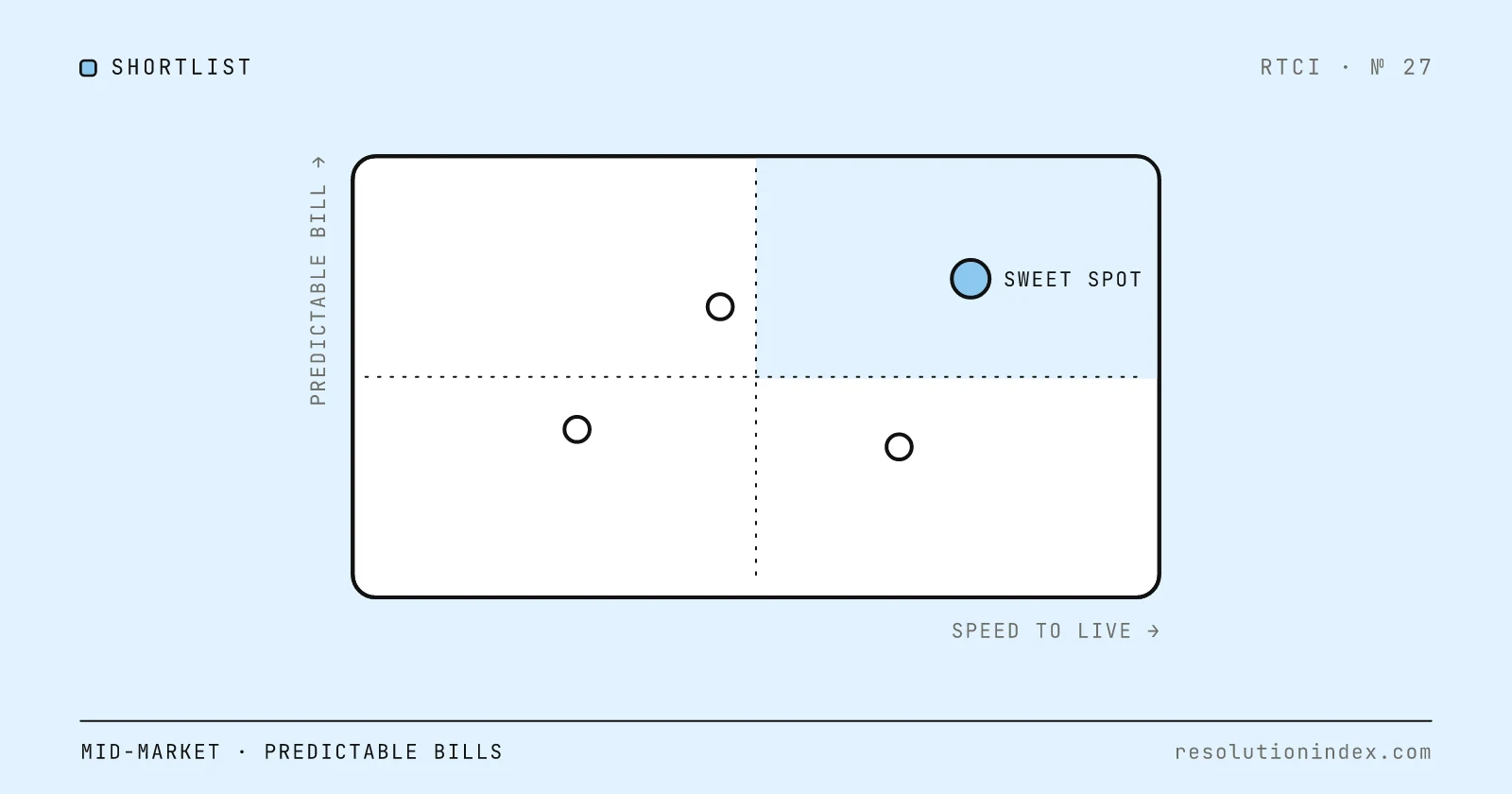
The best AI support platforms for mid-market companies (about 100 to 1,000 employees) in 2026 are Intercom Fin, Freshdesk Freddy AI, Zendesk AI, DevRev and YourGPT. Each can go live in 30 to 90 days without a system integrator, and each either publishes its AI price or sells a flat plan finance can model. Pick by constraint: Fin for per-outcome pricing on your current helpdesk, Freddy for helpdesk and AI from one vendor, Zendesk AI if you already run Zendesk, DevRev to link support to engineering, and YourGPT for a flat AI bill.
Which platform fits which constraint?
- Fast autonomous answers, paid per outcome: Intercom Fin ($0.99 per outcome; runs on your current helpdesk or on Intercom).
- The helpdesk and the AI from one vendor: Freshdesk Freddy ($19–$89 per agent plus $0.49 per AI session).
- Already running on Zendesk: Zendesk AI ($1.50–$2.00 per automated resolution plus seats). Deepen it before you migrate.
- Support tied closely to product and engineering work: DevRev, on a written quote and a migration pilot.
- A flat, predictable AI bill on top of your current helpdesk: YourGPT (flat plans from $39 per month billed yearly, no per-resolution fee).
- Decagon, Sierra, and Ada: shortlist only when conversation volume, integration budget, and outcome contracts support a six-figure annual commitment.
Score vendors on mid-market weights: bill predictability and cost per verified resolution (25%), implementation speed (20%), admin-team fit (15%), integrations without heavy professional services (15%), verified resolution quality (15%), then governance and commercial flexibility. Shortlist two or three, run a 30–90 day pilot with human-judged resolution samples, and compare cost per verified resolution rather than vendor-claimed containment.
Who This Is (and Isn’t) For
This post is for VP Support, Head of CX, RevOps, or IT buyers at companies with 100–1,000 employees who need a two-to-four vendor shortlist. You have outgrown free-tier chat widgets, you cannot justify an enterprise agent platform without proof, and you want resolution economics rather than feature lists.
It is not for ecommerce-only Shopify operations, which need different weights: see Best AI Support Platforms for Ecommerce and Intercom Fin vs Gorgias AI for Ecommerce. It is also not for enterprise RFPs, where security review and professional services carry the most weight: see Best AI Support Platforms for Enterprise.
What Does “Mid-Market” Mean for AI Support?
This guide assumes a support team of roughly 5 to 40 agents handling a few thousand to about 20,000 conversations a month across email, chat and social, with one to three people doing admin work and no dedicated AI operations staff. If your team is far outside that range, the weights below will need adjusting.
Constraints that follow from that shape:
- Finance approves fixed or capped spend, so a usage bill that jumps in a good month triggers a budget review.
- Go-live has to happen in 30–90 days, not through a nine-month system-integrator project.
- CRM, billing and identity systems are already in place, so the AI agent has to attach to them rather than replace them.
- A wrong autonomous action is a brand risk, and there is no one watching the AI around the clock.
What separates mid-market from SMB: you need SSO, roles, audit trails and multi-channel routing, not just a chat widget. What separates it from enterprise: you rarely need FedRAMP, on-premises deployment or data residency across many regions.
Mid-Market Evaluation Criteria and Weights
Use these weights for a mid-market evaluation. Enterprise and ecommerce weights produce different winners, so do not reuse them.
| Criterion | Weight | Why mid-market cares | How to score |
|---|---|---|---|
| Cost per verified resolution (CPVR) + bill predictability | 25% | Finance approves fixed or capped spend | Model seats + AI usage at 3 volume bands; require spend caps |
| Time-to-value / implementation | 20% | 1–3 person admin team; go-live in 30–90 days | Days to first production resolution; templates vs services |
| Admin and team-size fit | 15% | Support org of 5–40 agents with no AI ops staff | Can one CX ops lead run the knowledge base, evals and handoffs? |
| Integration ecosystem (without enterprise PS) | 15% | Must attach to existing CRM, billing, product analytics, identity | Native connectors vs custom middleware cost |
| Verified resolution quality | 15% | A wrong autonomous action damages the brand | Human-eval sample, containment vs true resolution, handoff quality |
| Governance / security | 5% | SSO, roles and audit are needed; FedRAMP usually is not | SSO/SAML, RBAC, data retention, regional hosting |
| Vendor commercial flexibility | 5% | Annual contracts are fine; multi-year enterprise MSAs are friction | Self-serve or mid-market plan, pilot terms, exit clauses |
Score each vendor 0–5 on each criterion, multiply by the weight and sum. Fill the scores in from your pilot, not from brand preference.
Which Vendors Should You Rule Out First?
Before scoring vendors on the weights above, drop any platform that fails these checks:
- 1. The minimum contract or platform fee needs a six-figure first year before you have volume proof. Park it and revisit when volume justifies it. This is the usual Sierra and Decagon path.
- 2. No clean human handoff into your existing inbox or helpdesk. If the AI agent cannot escalate with full context into the system your agents already use, stop there.
- 3. No spend controls on per-resolution or per-session AI charges. If the vendor cannot cap monthly AI spend or send volume alerts, finance will block the purchase.
- 4. Implementation only through a system integrator, with more than 90 days of mandatory services. A mid-market team cannot wait a quarter for a knowledge-base import.
- 5. An ecommerce-only data model when you are B2B SaaS or multi-industry. A platform built around Shopify order objects will not model B2B ticket flows well.
Apply these before you book a demo.
How We Shortlisted
We filtered on three things: published pricing that a mid-market finance team can model, implementation that a one-to-three person admin team can run, and the RTCI verified-resolution lens, which compares cost per verified resolution rather than vendor-claimed containment or deflection. Index figures (score, tier, realistic resolution rate, cost per resolution) come from the RTCI index as rescored in November 2026; DevRev is not in the index yet. For the full decision tree, see How to Choose an AI Customer Support Platform in 2026.
Platforms that failed the knockouts on contract size or implementation time moved to the enterprise-stretch section. Platforms with ecommerce-only data models moved to the ecommerce guide. No vendor paid for placement on this list.
Best AI Support Platforms for Mid-Market (2026)
The five platforms below are the primary shortlist. Each section covers what it is, what it costs as of November 2026, the resolution evidence behind it, who should pick it, who should skip it, and the one trade-off to raise in procurement. Every section ends with the vendor’s own product video. Re-check prices on the vendor site before signature, because AI add-ons and billing definitions change often.
| Platform | Best for | How the AI is billed | Entry price (annual billing) | RTCI score | RTCI review |
|---|---|---|---|---|---|
| Intercom Fin | Fast autonomous answers on any helpdesk | $0.99 per outcome | No seats when used on another helpdesk; 50-outcome monthly minimum | 696, Strong | Fin review |
| Freshdesk Freddy AI | Helpdesk and AI from one vendor | $0.49 per session after 500 free (once) | $19 per agent per month | 703, Strong | Freddy review |
| Zendesk AI | Teams already running Zendesk | $1.50–$2.00 per automated resolution | $19 per agent per month (Support Team) | 592, Moderate | Zendesk AI review |
| DevRev | Linking support to product and engineering work | Sales-led quote | Quote | Not indexed | Not yet in the RTCI index |
| YourGPT | A flat, predictable AI bill on your current helpdesk | Flat plan with included AI credits | $39 per month | 960, Elite | YourGPT review |
Intercom Fin: Best for Fast Autonomous Answers You Pay For Per Outcome
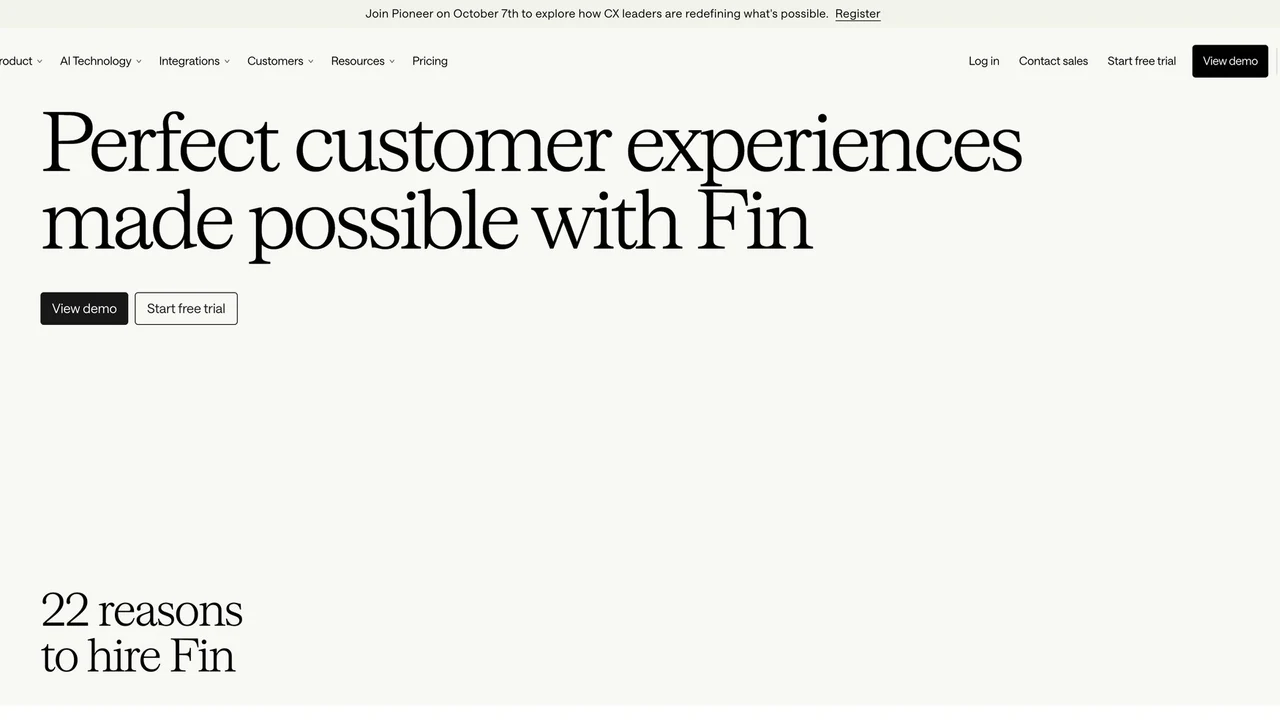
Fin is the AI agent from the company formerly called Intercom. It can run on Intercom’s own helpdesk or sit on top of the helpdesk you already use, such as Zendesk or Salesforce. For mid-market teams that want autonomous answers live in weeks and want the AI bill tied to outcomes, Fin has the clearest per-outcome price in the category.
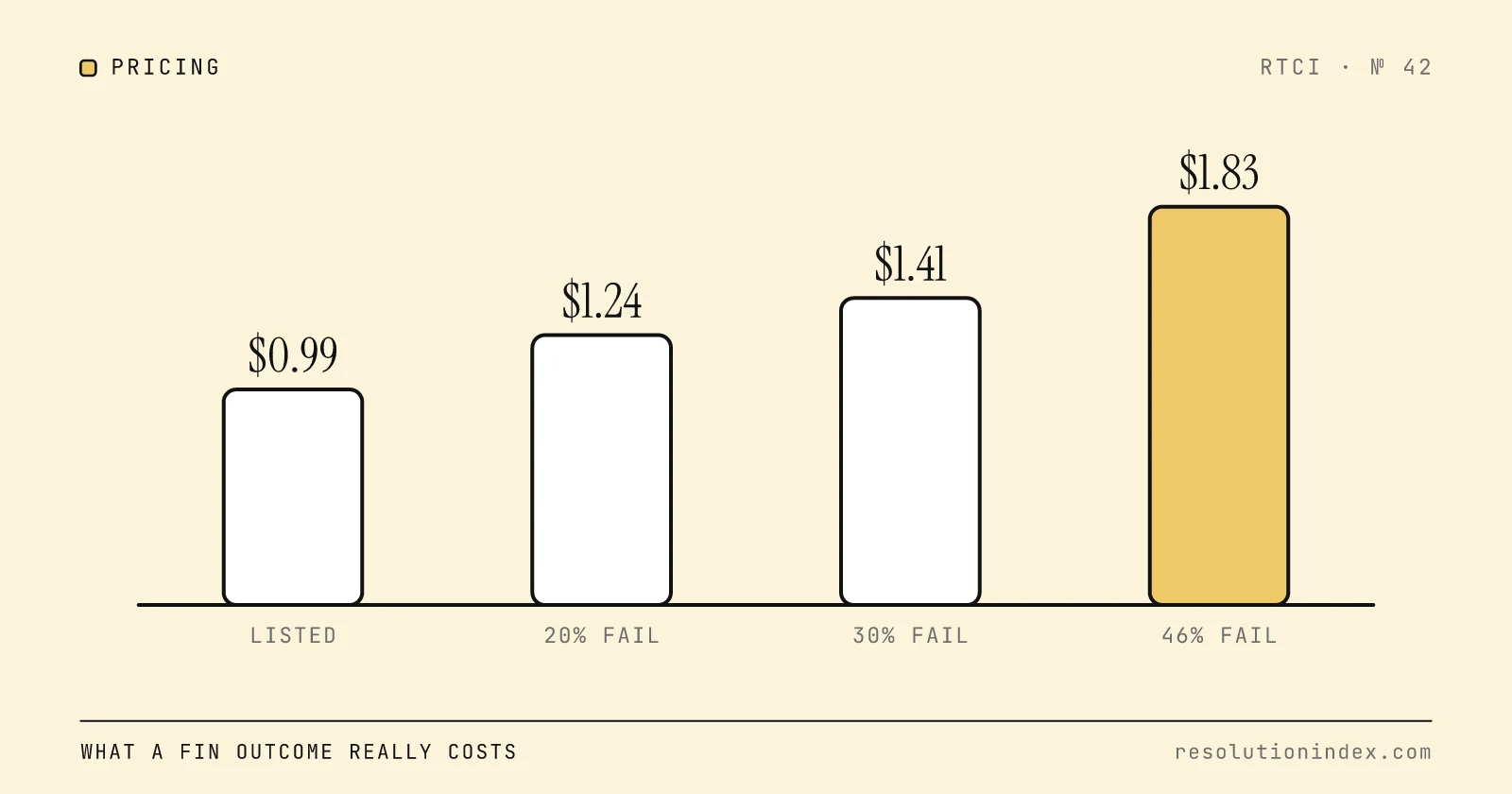
Pricing shape (November 2026): Fin costs $0.99 per outcome, charged once per conversation. Sales qualifications cost $9.99. On another helpdesk, Fin has no seat, setup, or platform fee but carries a 50-outcome monthly minimum. On Intercom’s own helpdesk you also pay per-seat licences, which our pricing guide breaks down by plan. Source: intercom.com/pricing.
Resolution evidence: Fin reports a 76% average resolution rate across more than 12,000 customers. Under RTCI’s rule that becomes a realistic 56–66%, which ranks Fin #1 of 20 in the RTCI index with an RTCI score of 696 (Strong). Our Intercom pricing guide shows the full bill.
Pick it if:
- You want AI cost tied to outcomes rather than seats or sessions.
- You want to keep your current helpdesk and add an AI front door on top.
- Your knowledge base is in decent shape, or you can get it there in a few weeks.
Skip it if:
- Finance needs a fixed monthly AI figure. Per-outcome billing grows as the AI gets better, so model three volume bands and ask for a spend cap.
- You need deep ticketing, SLA, and routing rules and are not on Intercom. Pair Fin with a helpdesk-first platform, or pick one.
Trade-off to name: an “outcome” is not always a resolution. Fin also bills procedure handoffs and assumed resolutions, where the customer simply leaves. A charge is reversed if the customer comes back on the same conversation, but not if they open a new one. There is also an ownership change to underwrite: Salesforce completed its roughly $3.6B acquisition of Fin on September 10, 2026, and Fin now sits alongside Agentforce in Salesforce’s AI portfolio. Published prices were unchanged as of November 7, 2026, but ask for price protection through the contract term. See Hidden Cost of AI Customer Support Pricing for contract language.
Fin’s official demo shows the agent resolving a live support conversation:
Freshdesk Freddy AI: Best for Teams That Want the Helpdesk and the AI From One Vendor
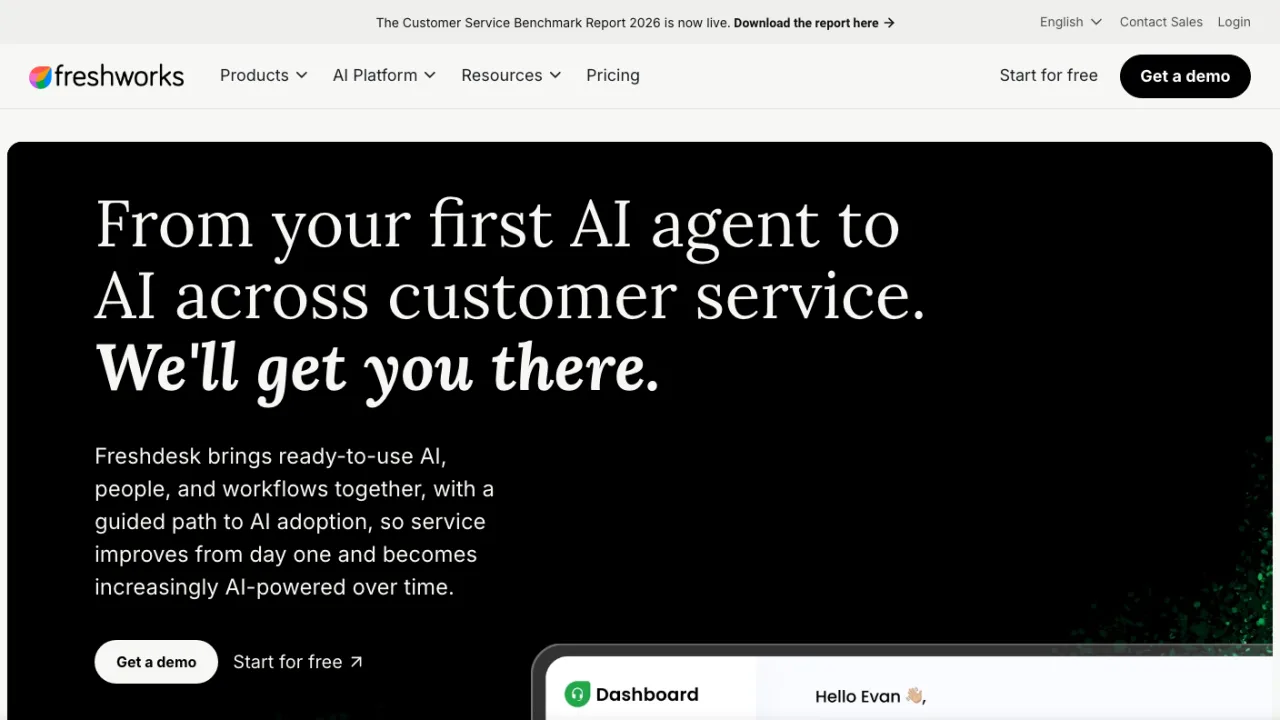
Freddy AI is built into Freshdesk, so the ticketing system, the AI agent, and the agent copilot all live in one product and on one invoice. That is the reason to pick it: you get a complete helpdesk (SLAs, routing, automations, reporting) that one CX ops lead can run, with AI switched on inside it rather than integrated from outside.
Pricing shape (November 2026): Freshdesk seats cost $19 (Growth), $55 (Pro), or $89 (Enterprise) per agent per month on annual billing. Chat and other messaging channels need Freshdesk Omni, at $29, $79, or $119. The Freddy AI Agent is billed per session: 500 free sessions once per account, then $49 per 100 sessions ($0.49 each). Freddy Copilot costs $29 per agent per month and is only available on Pro and Enterprise. Source: freshworks.com/freshdesk/pricing.
What that means for a 15-agent team: Pro seats come to $825 per month (15 × $55). Add 2,000 AI sessions and you pay $980 more (2,000 × $0.49), for about $1,805 a month before Copilot. Under RTCI’s rule, Freddy’s realistic resolution rate is 52–62%, which works out to $0.79–$0.94 per resolved conversation and an RTCI score of 703 (Strong). Our full Freshdesk pricing breakdown walks through every line item.
Pick it if:
- You want one system of record for tickets and AI, not two vendors stitched together.
- Your team is 5–40 agents and has no dedicated AI or IT staff.
- You are already on Freshdesk, or you are choosing a first helpdesk and want AI included from day one.
Skip it if:
- The AI must run multi-step actions across three or more external systems. Test those flows against Fin or a Decagon-class agent before you sign.
- You are happy with your current helpdesk and only want a better AI layer on top. Migrating ticketing to get Freddy rarely pays for itself.
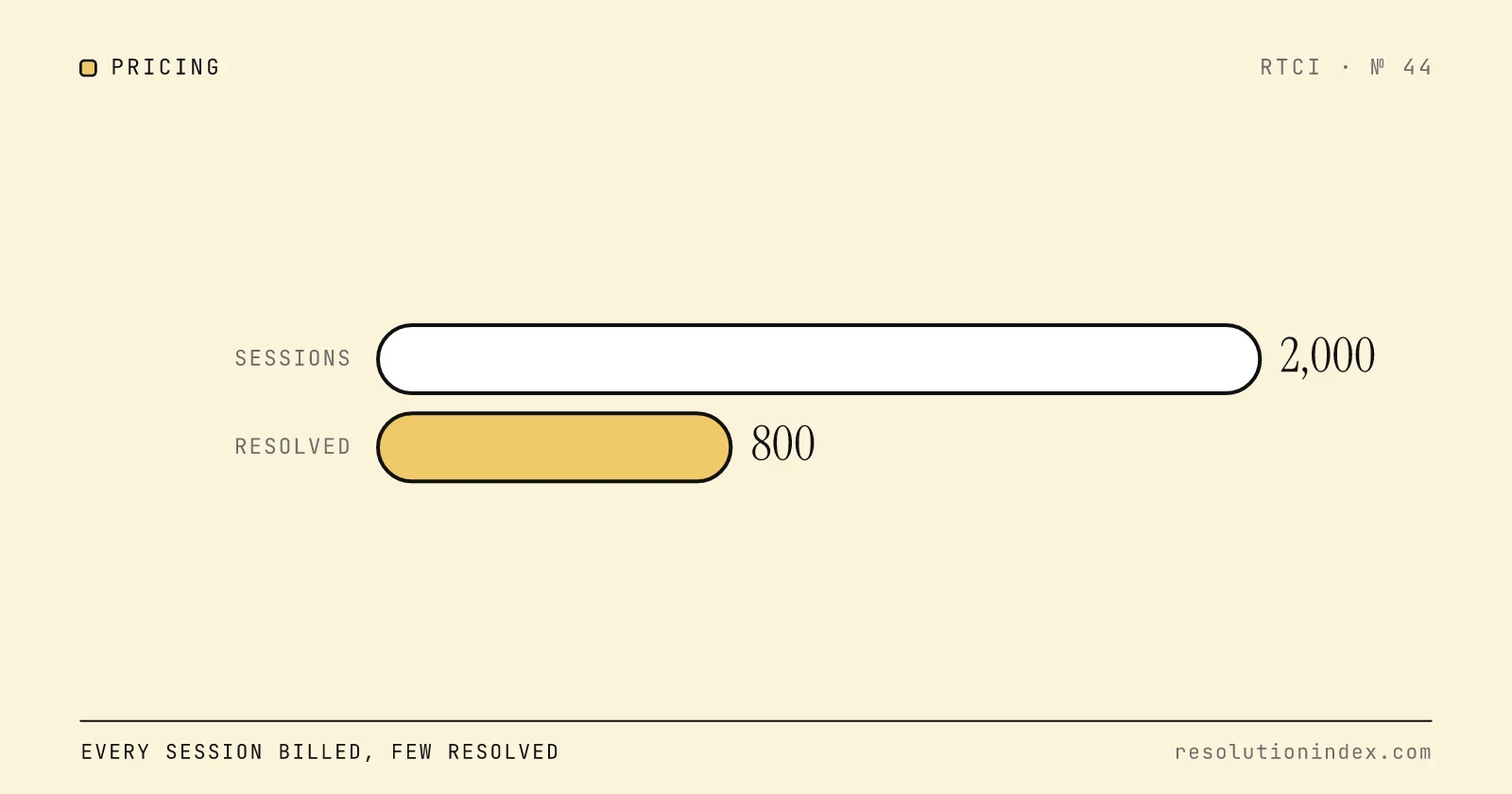
Trade-off to name: you pay for every session, whether or not it resolves. The session price rose to $49 per 100 for first-time purchases from November 13, 2025, and monthly payers lose unused sessions at the end of each cycle. Track verified resolutions separately from sessions, and use Compare AI Support Quotes Apples-to-Apples to put sessions and outcomes on the same unit. Our Freshdesk Freddy review has the full score.
Freshworks’ own product overview shows how the AI agent handles self-service and hands off to people:
Zendesk AI: Best When Your Team Already Runs on Zendesk
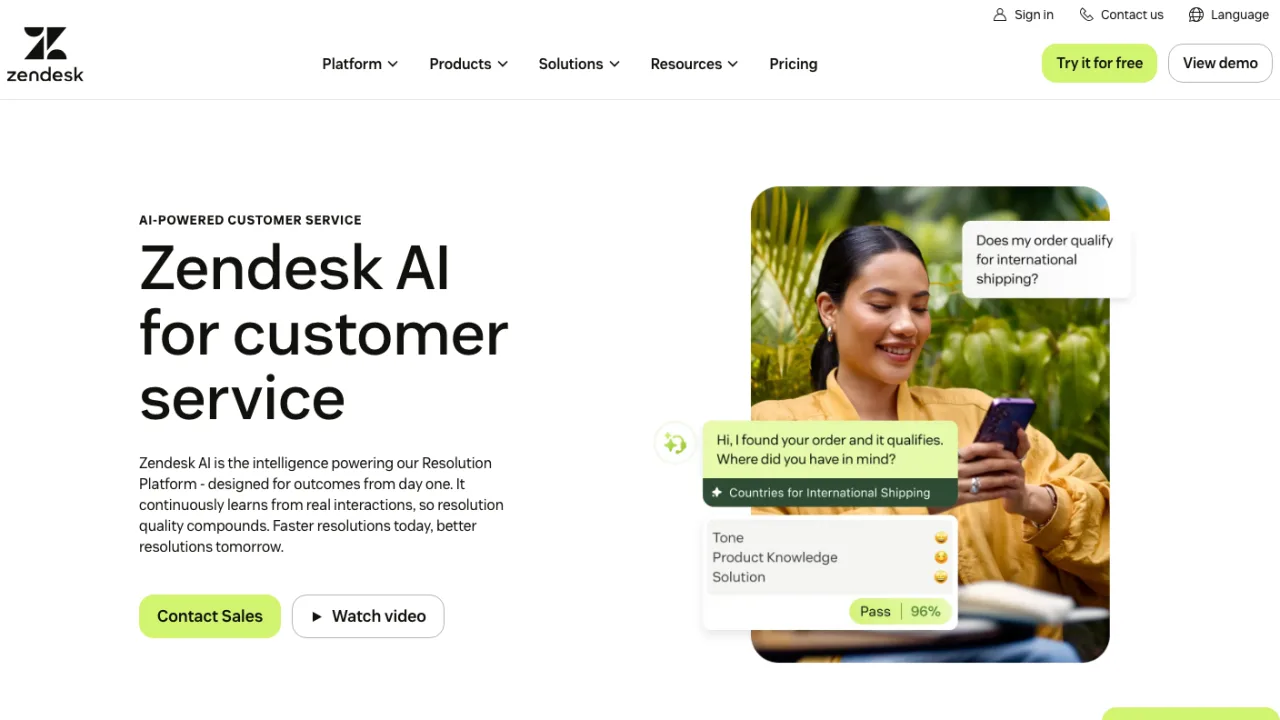
Zendesk AI is the AI layer inside Zendesk’s Support and Suite plans: customer-facing AI agents, Copilot for human agents, intelligent triage, and quality scoring. For teams already on Zendesk, the question is rarely whether to switch. It is how far to deepen Zendesk AI before an alternative makes financial sense.
Pricing shape (November 2026): seats cost $19 (Support Team), $55 (Suite Team), or $115 (Suite Professional) per agent per month on annual billing; Enterprise is quoted. Each plan includes a small allowance of automated resolutions. Beyond it, AI agents cost $1.50 per automated resolution on a committed volume or $2.00 pay-as-you-go. Copilot is $50 per agent per month on Suite Professional and above. Source: zendesk.com/pricing.
Resolution evidence: Zendesk’s headline is “up to 80% automation”. That is a best case and measures automation rather than resolution, so RTCI’s realistic figure is 36–46%. Since May 18, 2026, only LLM-verified resolutions draw on the allowance, which is a real step toward paying for outcomes. Zendesk AI has an RTCI score of 592 (Moderate). Our Zendesk pricing guide has every line item.
Pick it if:
- Your agents, macros, triggers, and marketplace apps already live in Zendesk.
- You need mature omnichannel ticketing, workforce tools, and governance around the AI.
- You want AI billing that only counts verified resolutions.
Skip it if:
- You are not on Zendesk yet. At $1.50–$2.00 per resolution plus seats and Copilot, the all-in cost usually exceeds Fin, Freshdesk, or a flat-rate AI layer (see the worked example below).
- You have fewer than about 10 agents and moderate volume. Suite’s setup overhead may not pay off.
Trade-off to name: Zendesk stacks its price. Seats, Copilot, AI agent resolutions beyond the plan allowance, and workforce or QA add-ons can each be a separate line. AI agents themselves are part of every plan, so there is no separate Advanced add-on to buy. Model the full stack at your agent count before approval, and read Break-Even: When AI Support Pays for Itself to test whether deepening Zendesk AI beats adding an AI layer on top.
Zendesk’s official overview of its AI agents:
DevRev: Best for Linking Support to Product and Engineering Work
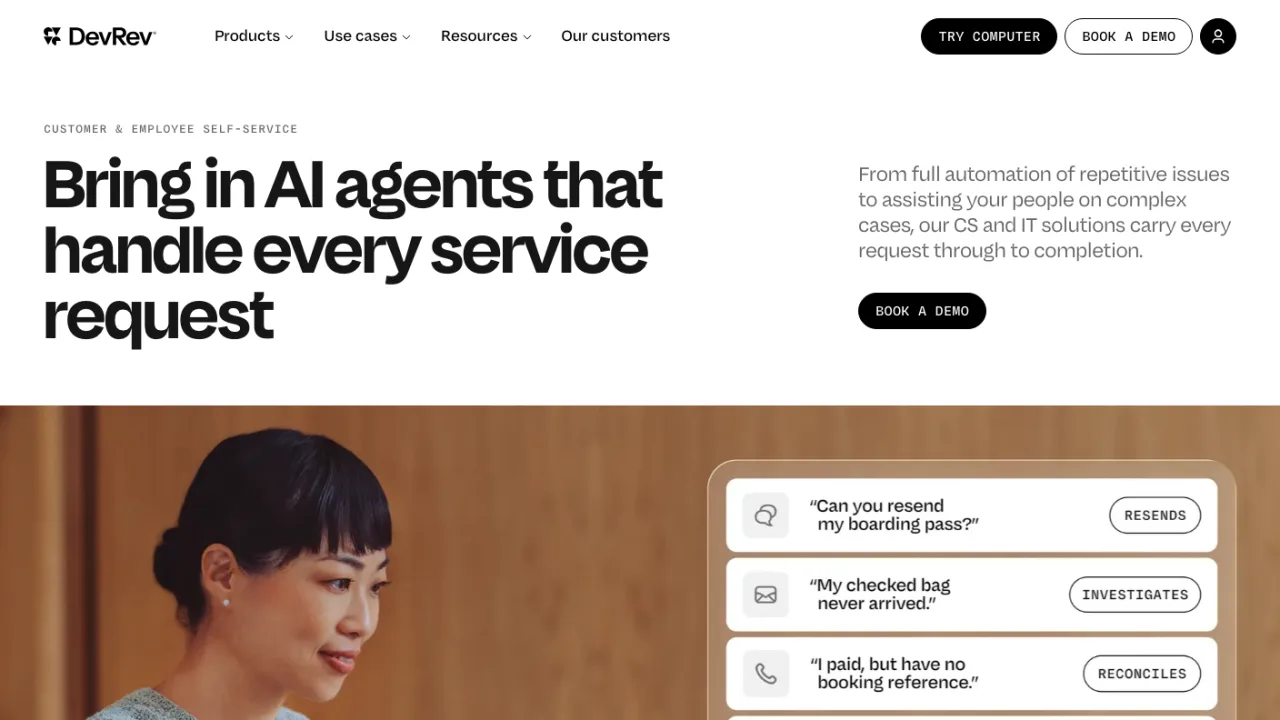
DevRev is an AI-native platform that puts customer support, product, and engineering work in one system. Its AI agents, sold under the name Computer, handle customer and employee requests and can carry them through to completion. The difference from a classic helpdesk is the link to engineering: a support ticket can be tied directly to the bug or feature request behind it, so support sees fix status and product sees customer impact.
Pricing shape (November 2026): DevRev is sales-led. Third-party listings in 2026 disagree on its seat and usage prices, so treat any figure you find as unverified and get a written quote that separates seats, AI usage, and any consumption credits. DevRev positions itself as lower total cost than Zendesk with AI included rather than added on; ask for that comparison in writing. Source: devrev.ai.
Resolution evidence: DevRev is not yet in the RTCI index, because we have not captured a dated public resolution figure and price. Judge it on your own pilot sample.
Pick it if:
- A large share of your tickets come from product bugs, feature gaps, or releases.
- You want support tickets linked to engineering issues in the same system, with status flowing back to the customer.
- You are already planning a helpdesk migration and would rather move to an AI-native platform.
Skip it if:
- Your procurement process requires a published price.
- Support and engineering work in separate tools and will stay that way. You would pay for a unified platform without using the unification.
Trade-off to name: migration is real work. Knowledge base, macros, historical tickets, integrations, and agent training all move with you. Price the migration alongside the licence. See First Contact vs End-to-End Resolution for why linking product fixes to support outcomes matters when you count resolutions.
A DevRev customer walks through auto-prioritising tickets, preventing SLA breaches, and syncing support with engineering:
YourGPT: Best for a Predictable Flat Bill and One AI Agent Across Support, Sales, and Ops
YourGPT is a no-code AI agent platform for support, sales, and operations, deployed across channels. It does not ask you to replace your helpdesk. You build the agent, connect your knowledge and systems, and put it in front of the inbox you already run. For mid-market buyers its strongest point is commercial: a flat monthly plan with no per-message or per-resolution fee, so a good month for the AI does not become a bad month for finance.
Pricing shape (November 2026): Essential costs $39 per month (2 chatbots, 10M AI credits), Professional $79 (5 chatbots, 30M credits), and Advanced $349 (10 chatbots, 100M credits), all billed yearly. Enterprise is quoted. Credits are weighted by model: 1× for the Efficient model, 2.5× for GPT-4.1 and 5× for GPT-4o. A 7-day free trial needs no credit card. YourGPT states about 5,000 credits per conversation on a 1× model and sells extra credits at $7 per 2M. RTCI estimates about $0.13 per resolution on Advanced at roughly 3,000 conversations a month, with 90% resolved in RTCI's November 2026 test (RTCI score 960, Elite). Source: yourgpt.ai/pricing.
Resolution evidence: YourGPT publishes how it counts resolution: resolved eligible requests divided by all eligible requests, with human takeovers and simple containment excluded. On that definition it reports 90%+ for SaaS, ecommerce, retail, fitness, and clinics, about 85% for banking and telecom, and about 82% for complex enterprise. Source: How we reached 90% AI resolution.
Pick it if:
- Finance wants a fixed AI line item instead of a bill that grows with every resolution or session.
- You want to add AI to your current helpdesk without migrating tickets, macros, and agent training.
- The same agent platform should also cover sales or operations conversations, not only support tickets.
- You want to start with one department or channel and expand on the same plan.
Skip it if:
- You want the AI and the full ticketing system from a single vendor. Freshdesk or Zendesk fit that better.
- Procurement requires a published per-resolution price to compare vendors line by line. YourGPT’s flat plans do not have one.
Trade-off to name: a flat plan is only predictable while your volume fits its credits, and credit use depends on the model. At YourGPT's stated 5,000 credits per conversation, Professional covers about 6,000 conversations a month on a 1× model (30M ÷ 5,000) but about 1,200 on GPT-4o (30M ÷ 25,000). Run 100 real conversations during the trial and compare the credits used with that figure before you commit to a yearly plan. Our YourGPT review includes a credit-burn test you can copy.
YourGPT’s official overview shows the agent builder and channels:
When Should You Stretch into Enterprise Agent Platforms?
Decagon, Sierra, and Ada are enterprise products, sold by custom quote with commitments that most mid-market finance teams will not approve without volume proof. In the RTCI index they score 682 (Decagon, Strong), 612 (Sierra, Moderate) and 799 (Ada, Elite), all on estimated costs because none publishes a rate card. Look up-market when your conversation volume, integration needs, and budget clearly outgrow the shortlist above.
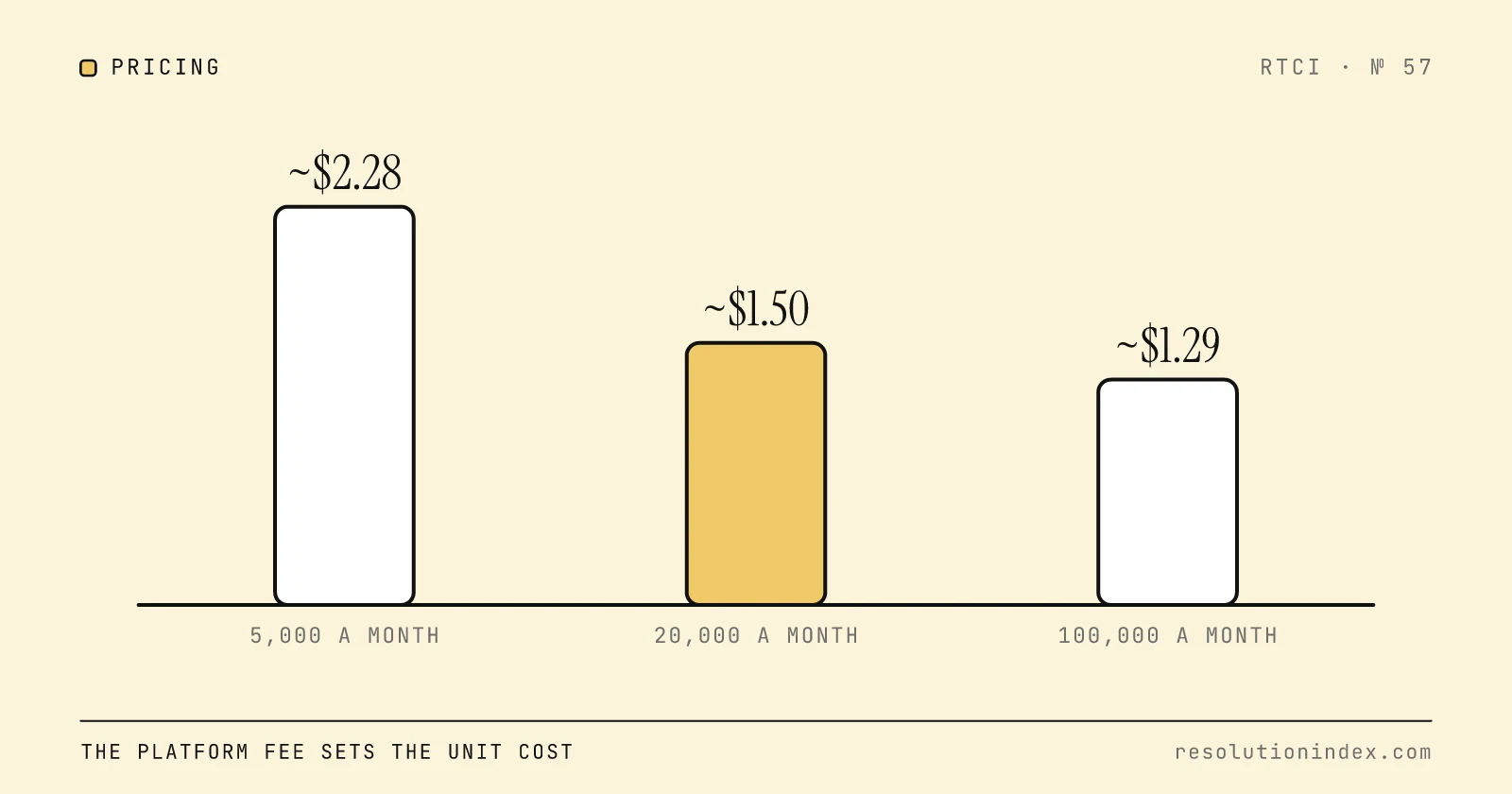
Decagon: for high-volume concierge agents across chat, voice, and email. Decagon configures its agents through Agent Operating Procedures that CX teams own. It has no pricing page; contracts are quoted per conversation or per resolution, and Vendr lists a median annual Decagon contract of $432,750. RTCI estimates ~$1.50 per resolution at 20,000 conversations a month, rising to about $2.28 at 5,000, because a reported ~$50,000-a-year platform fee is spread over fewer conversations. Our Decagon review shows the math, and the Decagon pricing guide runs it at three volumes.
Decagon’s live voice demo from its 2025 customer event:
Sierra: for action-taking agents at large consumer brands. Sierra serves brands such as SiriusXM, Rocket Mortgage, CLEAR, and Chime, with agents that take actions in systems of record across voice and digital channels. Pricing is outcome-based or blended, by custom quote. Third parties report a platform fee of about $150,000 a year and setup fees of $50,000 to $200,000. Its outcome model is worth studying even if you do not buy it. Our Sierra review has the buyer checklist.
Sierra’s own guide to how it thinks about AI agents:
Ada: for no-code automation across brands and regulated industries. Ada serves high-volume support teams in financial services, insurance, gaming, retail, technology, and travel. It sells annual contracts by custom quote; most customers choose conversation-based pricing, with a resolution-based option for some enterprises. Vendr reports a $75,000 median contract. Get the per-conversation or per-resolution rate in writing before you model ROI. Our Ada review has the detail.
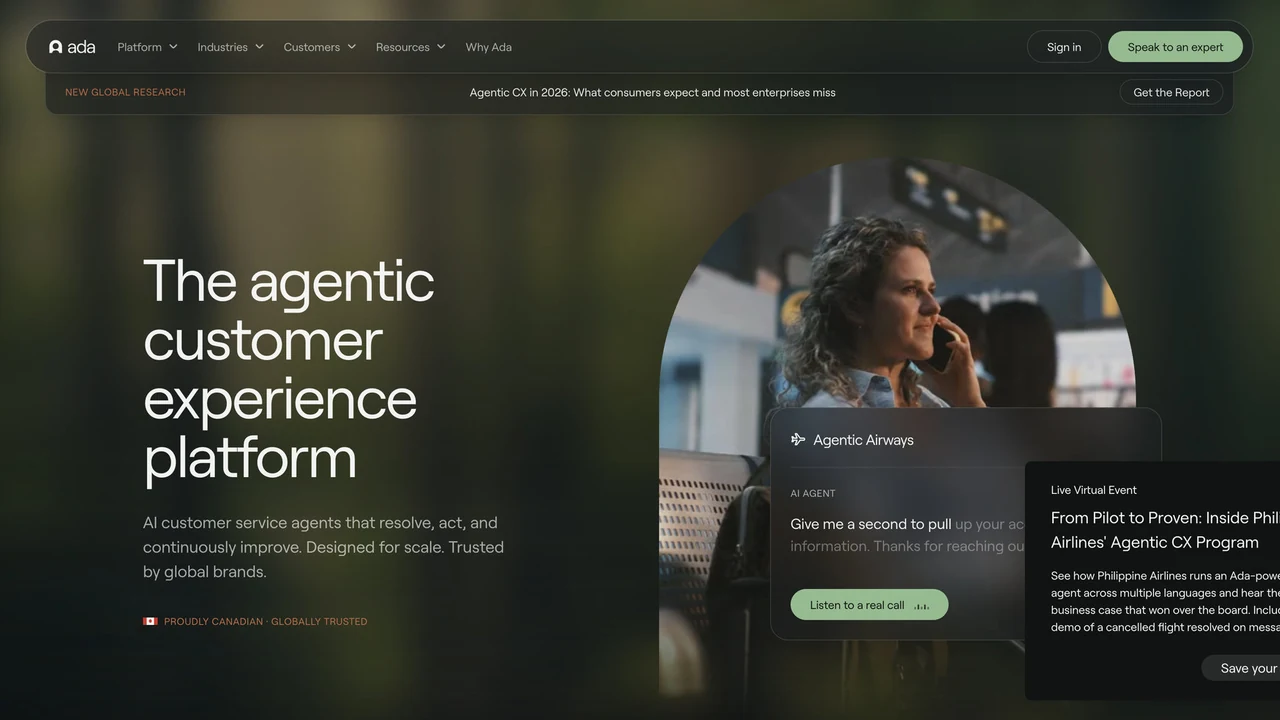
Ada’s official overview:
Buying one of these before your volume justifies the contract means paying a platform fee spread over too few conversations, which is exactly what drives Decagon’s estimate from ~$1.50 to about $2.28 per resolution. Prove verified resolution on the shortlist first, and move up-market when the data says you have outgrown it.
Segment Comparison Matrix
Score each vendor against the mid-market weights. Fill in the 0–5 scores from your pilot data, not from vendor demos.
| Criterion | Weight | Fin | Freddy | Zendesk AI | DevRev | YourGPT |
|---|---|---|---|---|---|---|
| CPVR + bill predictability | 25% | |||||
| Time-to-value | 20% | |||||
| Admin/team fit | 15% | |||||
| Integrations (no heavy PS) | 15% | |||||
| Verified resolution quality | 15% | |||||
| Governance/security | 5% | |||||
| Commercial flexibility | 5% |
Fill it from a 30-day pilot with real tickets, a written resolution definition, and unit economics finance has signed off. A table filled from demos measures the demos.
Which Pricing Models Will Finance Actually Feel?
This shortlist uses five pricing shapes. Each behaves differently when volume or AI quality changes.
Per outcome (Intercom Fin): you pay $0.99 for each billed outcome. The unit is clear, but the total grows as the AI improves. Model three volume bands and ask for a spend cap.
Per session (Freshdesk Freddy): you pay $0.49 for each AI session after a one-time 500 free. Sessions are billed whether or not they resolve, so track verified resolutions separately from sessions.
Seats plus add-ons (Zendesk AI): seats, Copilot, and $1.50–$2.00 per automated resolution are separate lines. The all-in total is what finance feels, not the seat price.
Flat plan (YourGPT): one fixed monthly fee with included AI credits and no per-resolution charge. The bill does not move with AI quality; the risk is running out of credits, so measure credit burn in the trial.
Quote-based (DevRev): no public unit price. Ask for seats, AI usage, and any consumption credits as separate lines so you can compare.
Worked example: B2B SaaS, 250 employees, 12 agents, 6,000 conversations a month. Assume the AI handles 4,000 of them and resolves 2,400. Fin and YourGPT run on top of your existing helpdesk, so their figures are AI only; Freshdesk and Zendesk figures include their own seats.
| Platform | Monthly cost | How it adds up |
|---|---|---|
| Intercom Fin | ~$2,376 + existing helpdesk seats | 2,400 outcomes × $0.99 (more if handoffs are also billed as outcomes) |
| Freshdesk Pro + Freddy | ~$2,620 | 12 seats × $55 + 4,000 sessions × $0.49 (from month two) |
| Zendesk Suite Professional | ~$4,980–$6,180 | 12 seats × $115 + 2,400 resolutions × $1.50–$2.00, less a small included allowance; Copilot adds $600 |
| DevRev | Quote | Ask for seats, AI usage, and credits as separate lines |
| YourGPT Advanced | $349 + existing helpdesk seats | Flat plan with 100M credits; 4,000 conversations × 5,000 credits = 20M on a 1× model |
These are sketches, not quotes. Feed your own volume, resolution rates, and human loaded cost into the Cost per Verified Resolution Calculator. For the full pricing model taxonomy, read AI Customer Support Pricing Models Compared.
Implementation and Team-Size Playbook
Run implementation on a 30/60/90 day cadence, owned by one CX ops lead with an executive sponsor.
Days 0–30: Connect and draft. Connect the AI agent to your helpdesk in read-only mode. Import your knowledge base. Build a 100-conversation labeled sample from the last 30 days, unfiltered. Define verified resolution in writing (for example, no human handoff and no recontact within 72 hours) and freeze that definition in a shared document.
Days 31–60: Pilot in production. Enable AI on the top 5–10 intents by volume. Start in drafting mode, where the AI suggests and humans send, then allow autonomous resolution on the simplest intents. Measure verified resolution rate, recontact rate, handle time, policy violations, and cost per verified resolution. Have finance co-own the unit economics model.
Days 61–90: Expand and decide. Enable autonomous resolution on the next tier of intents. Review 50 “resolved” conversations per week by hand for accuracy. Compare vendor-reported resolution against your verified resolution, fill in the comparison matrix, and make the go/no-go decision in a one-page memo signed by the support lead, finance and the executive sponsor.
Who owns what during the pilot:
- CX ops lead: KB content, conversation design, eval sample, vendor management
- Support lead: ticket mix, agent feedback, handoff quality review
- Finance: unit economics model, spend cap monitoring, contract review
- Security: questionnaire, data retention, SSO confirmation
Recommended Shortlists by Situation
Use these as starting points. Your ticket mix and existing stack should override them.
B2B SaaS, 250 employees, 12 agents, 6,000 conversations/month: Intercom Fin on your current helpdesk, or Freshdesk Freddy. Compare Fin’s outcome pricing against Freshdesk’s session pricing at your expected resolution rate. If you are already on Zendesk, deepen Zendesk AI before migrating. Leave Decagon and Sierra until volume grows enough to absorb a platform fee.
Multi-brand services, 600 employees, 35 agents, already on Zendesk: deepen Zendesk AI first. Evaluate Fin on Zendesk as an additional AI layer if Zendesk’s native AI underperforms on your ticket mix. Consider DevRev only if linking tickets to product issues is a strategic priority and the migration cost is acceptable.
Cost-constrained product company, 120 employees, 6 agents: start with YourGPT Advanced or Freshdesk Growth. Prove resolution value in a 60-day pilot. If the verified resolution rate justifies expansion, evaluate Intercom Fin or Freshdesk Pro. A six-figure contract without volume proof will not pass finance.
First AI evaluation, no standard helpdesk yet: Freshdesk Freddy or Intercom Fin. Pick Fin if you want outcome pricing and a conversational AI front door. Pick Freshdesk if you want a complete helpdesk with AI included.
Common Mid-Market Mistakes
- Buying an enterprise contract before volume justifies it. A platform fee spread over 6,000 conversations a month costs more per resolution than the same fee over 20,000; Decagon’s review shows the jump.
- Buying ecommerce tools for B2B support. Gorgias is built around Shopify orders. If you are B2B SaaS, the Intercom Fin vs Gorgias comparison will mostly confirm Gorgias is not your tool.
- Equating deflection with resolution. Containment counts conversations that ended without a human, not conversations where the issue was solved. Use What Is a Good AI Resolution Rate? to calibrate.
- Ignoring admin time. Every AI platform needs KB maintenance, policy updates, eval sampling, and handoff tuning. If your one CX ops lead is already stretched, count that time alongside the subscription.
- Letting vendors pick the pilot sample. Use unfiltered tickets from your real queue.
- No finance owner on unit economics. If finance does not co-sign the cost model, the first large invoice will surprise someone.
FAQ
How many vendors should I pilot for mid-market AI support? Two is ideal, three is the maximum. More than three dilutes pilot quality and delays the decision. Use the knockout filters to narrow before piloting.
Should I consider Decagon or Sierra for a 200-person company? Only if your conversation volume and integration requirements exceed what Fin, Freshdesk, or Zendesk can handle at acceptable resolution quality, and your budget supports a six-figure annual contract. Most 200-person companies should prove value on mid-market platforms first.
Is Intercom Fin’s per-outcome pricing safe for budget? It is value-aligned but variable. Model three volume bands, negotiate a monthly spend cap, and write the outcome definition into your contract. Without a cap, a better-performing AI produces a bigger invoice. Read the Hidden Cost of AI Customer Support Pricing for contract clause guidance.
Can I run Intercom Fin on my existing helpdesk? Yes. Fin can run on non-Intercom helpdesks such as Zendesk or Salesforce without Intercom seats, subject to a 50-outcome monthly minimum. That suits mid-market teams that want AI without migrating their system of record.
What resolution rate should I expect? There is no universal number. Define verified resolution in writing (for example, no human handoff and no recontact within 72 hours), measure it on a human-judged sample, and compare vendors on the same definition. RTCI’s realistic ranges for this shortlist run from 36–46% (Zendesk AI) to 90% in RTCI’s test (YourGPT). See What Is a Good AI Resolution Rate? and First Contact vs End-to-End Resolution.
How long should a mid-market AI support pilot take? 30–90 days: days 0–30 for connection and drafting, 31–60 for a production pilot on top intents, 61–90 for expansion and the decision. A pilot that runs past 90 days usually means the requirements were never locked.
Next Steps
Lock your ticket mix, write down your resolution definition, apply the knockout filters, and shortlist two or three platforms. Then run a 30–90 day pilot with human-judged samples and let cost per verified resolution make the call.
Change log
- Added a link to the new Decagon pricing guide.
- Updated Fin’s ownership (Salesforce completed the acquisition on September 10, 2026), replaced an unsourced Decagon contract range with Vendr’s reported median, added RTCI scores for every indexed vendor, and removed em dashes.
- Published.
Read next
Keep reading
Picked for this article: the pieces it cites and the ones that answer the next question buyers usually ask.
Most related
Best AI Support Platforms for Enterprise (2026)
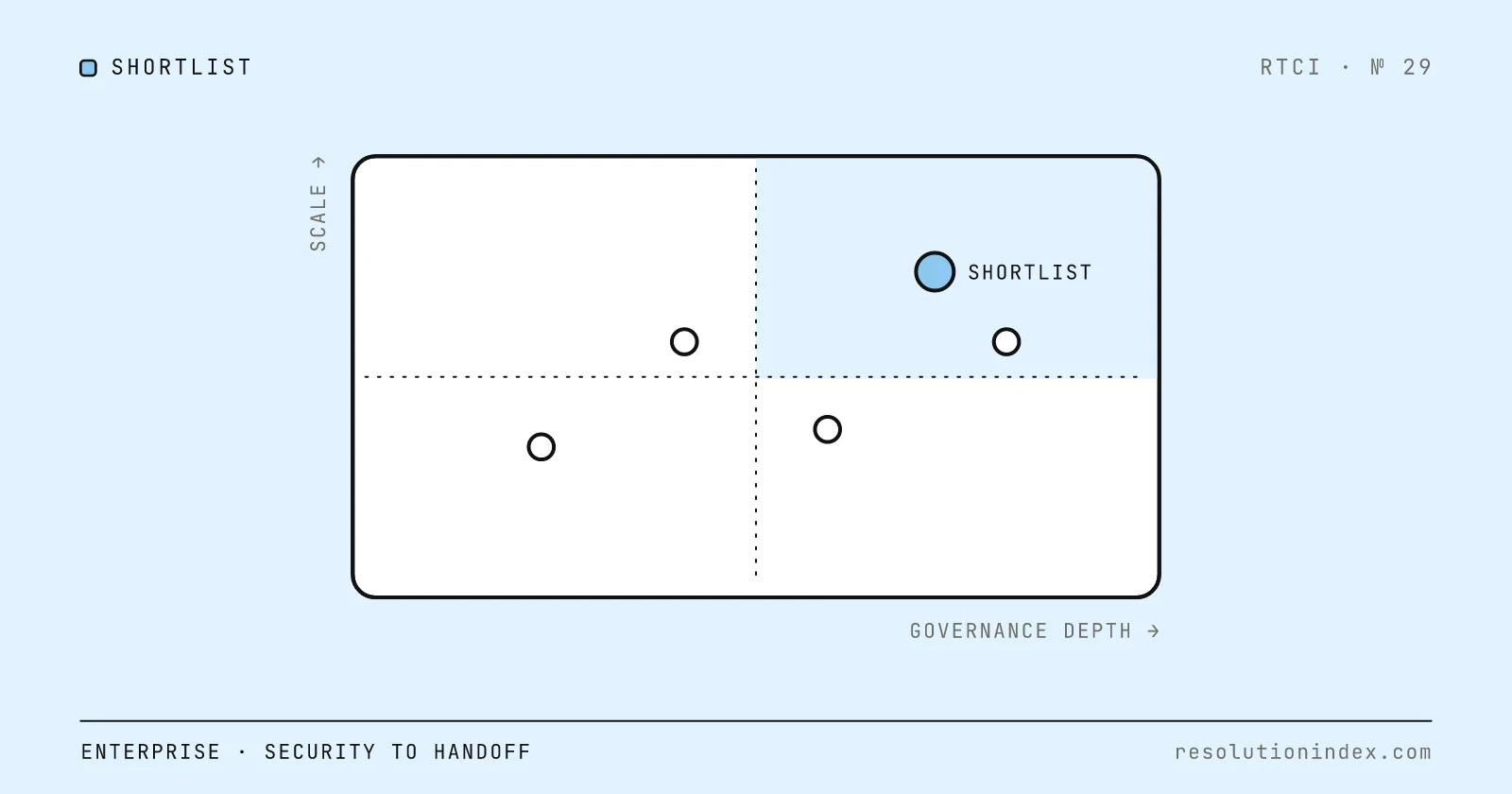
Enterprise shortlist: Salesforce Agentforce, Zendesk AI, Intercom Fin, Decagon, Sierra, Cognigy, and Kore.ai compared on security, deployment options, RTCI score, cost per resolution, and contract terms. Includes a copyable RFP scorecard.
Best AI Support Platforms for Ecommerce (2026)
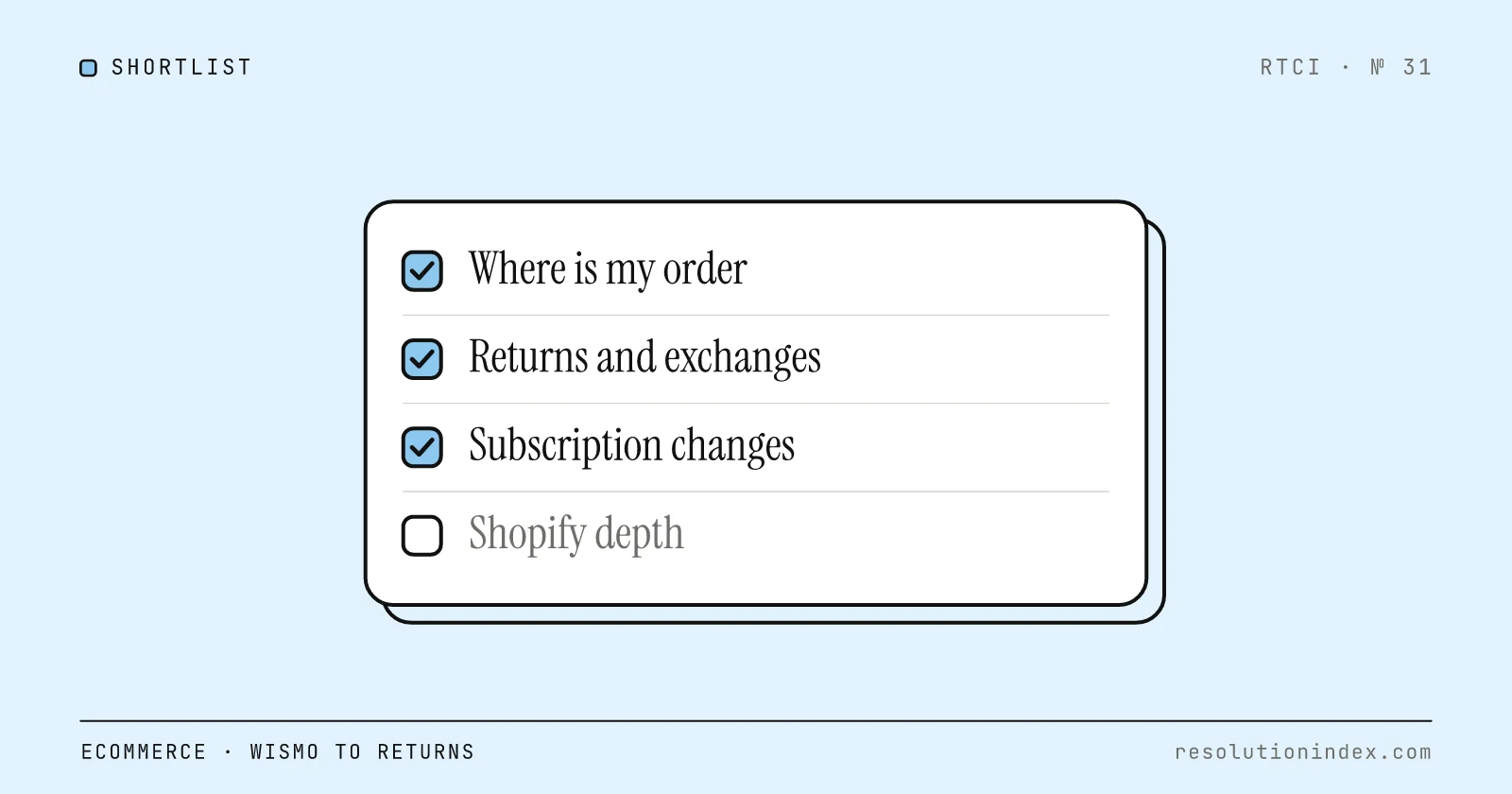
Ecommerce shortlist: Gorgias, Yuma, Richpanel, Intercom Fin, Gladly, Decagon, and Zendesk AI compared on order actions, returns, subscriptions, Shopify depth and cost per verified resolution, with worked cost examples from published prices.
Decagon Pricing 2026: What It Costs, Reviews and Alternatives
Decagon publishes no prices. What its own pricing article says about per-conversation and per-resolution billing, RTCI's ~$1.50 per resolution estimate with the inputs shown, the cost at 5,000, 20,000 and 100,000 conversations a month, what to ask for in a quote, and the enterprise alternatives ranked on RTCI score.
Intercom Pricing 2026: What Fin Really Costs Per Resolution
Intercom pricing as of November 2026: seats from $29, Fin at $0.99 per outcome, the add-ons, and a worked cost per resolution for three team sizes.
Freshdesk Pricing 2026: Plans, Freddy AI Sessions, Real Costs
Freshdesk pricing as of November 2026: plans from $19 per agent, Freddy AI Agent at $49 per 100 sessions, and what each resolved conversation really costs.