Published Jul 29, 2026 · Updated Nov 19, 2026 · 3 min read
The Hidden Cost of AI Customer Support Pricing
The number on the pricing page is rarely the number on the invoice. RTCI's three-layer cost model breaks down what vendors leave out of the headline.
 Written by Andrew Hall, Editor
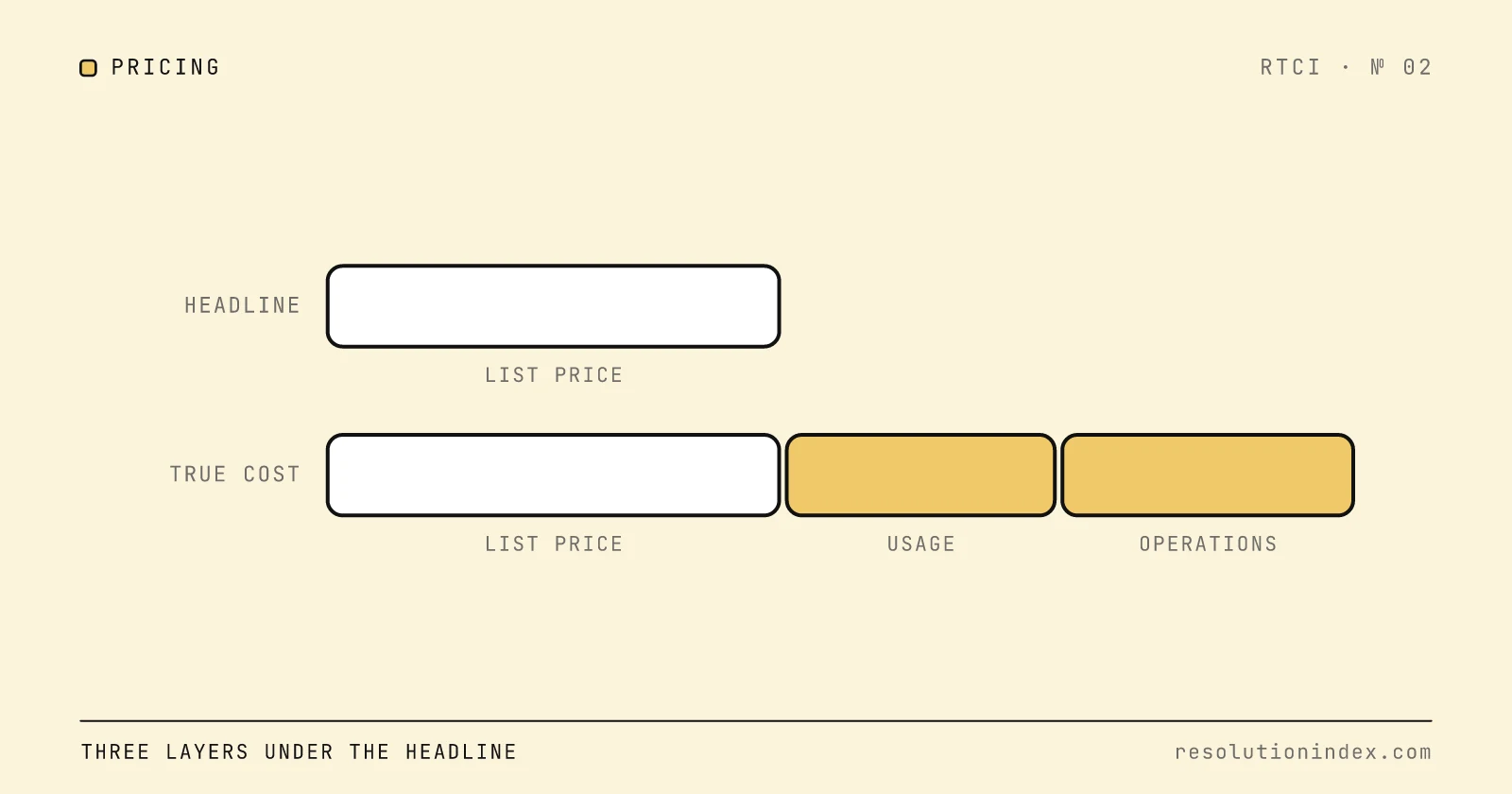
The hidden cost of AI customer support is everything on the invoice besides the headline rate: the fixed platform or seat fee you pay whether or not the AI resolves anything, overage past included allowances, add-on modules, and a second meter on the same ticket. RTCI splits every vendor's price into three layers so those costs are visible before you sign. A Zendesk team of 10 Suite Professional agents with Copilot, for example, pays $1,650 a month before its AI agent resolves a single ticket beyond the included 100.
Layer 1: Fixed platform or seat cost
This is the floor you pay whether or not the AI resolves a ticket: a platform minimum, required seats or a base plan. It ranges from nothing (Fin on another helpdesk, past its 50-outcome monthly minimum) to a reported ~$150,000 a year for Sierra.
A floor you could not find is not a zero floor. For YourGPT, RTCI's ~$0.13 (est.) cost per resolution assumes the Advanced plan at $349 a month across about 3,000 conversations. For any vendor, get the floor, billable event, included usage, overage, renewal and termination terms in writing.
For a low-volume team, a five- or six-figure annual floor makes the per-resolution rate almost irrelevant: you pay the floor either way.
Layer 2: Variable AI usage
This is the headline number: per resolution, per conversation, per session or per credit. It is the layer buyers compare, and the unit changes what it means. A per-conversation rate is paid on failures too, so at a 50% resolution rate a $0.75 conversation is $1.50 per resolution.
Salesforce Agentforce shows how far one product's pricing can split. It sells $2 per Help Agent resolution, Flex Credits at $0.10 per standard action ($0.15 per voice action), and, for existing Conversations customers only, $2 per conversation. Flex Credits and Conversations cannot be combined in one org. Which meter costs less depends on how many actions a typical conversation takes.
Layer 3: Add-ons and overage
This layer shows up on the invoice more than on the pricing page: optional modules, overage past an allowance, and two meters on one automated ticket, such as a seat fee and a per-resolution fee.
Help Scout AI and Zendesk AI both combine per-seat plans with a per-resolution fee, so the AI cost adds to your seats. Worked example for Zendesk: 10 agents on Suite Professional at $115 plus Copilot at $50 is $1,650 a month. The plan includes 10 automated resolutions per agent, 100 in total. If the AI agent resolves 1,000 tickets, the other 900 cost $1,350 at the $1.50 committed rate, so the month comes to $3,000, or $1,800 on top of the $1,650 floor shown first.
Why RTCI reports cost per resolution, not list price
List price answers the wrong question. The useful question is what one AI-resolved ticket costs at your volume once the floor, the usage meter and add-ons are divided across your real monthly resolutions.
RTCI's index reports a cost per resolution for every platform and says what each one includes. Some fold in a platform fee (Sierra's ~$2.61 and Decagon's ~$1.50 are estimates at 20,000 conversations a month); others are the usage meter alone, with seats listed separately (Fin's $0.99, Zendesk's $1.50–$2.00). That is why two platforms with similar headline rates can land far apart once your own seats and volume are added.
Before you sign, ask each vendor for all three layers in writing and run your own volume through them, or use RTCI's Support Savings Calculator. The full method is in Cost Per Verified Resolution: A New Framework.
Change log
- Added an answer-first summary and a worked Zendesk invoice, corrected the description of RTCI's cost figures (some exclude seats), and updated Salesforce Agentforce meters to the index.
- Aligned vendor figures with the RTCI index.
- Published.
Read next
Keep reading
Picked for this article: the pieces it cites and the ones that answer the next question buyers usually ask.
Most related
Cost Per Verified Resolution: A New Framework
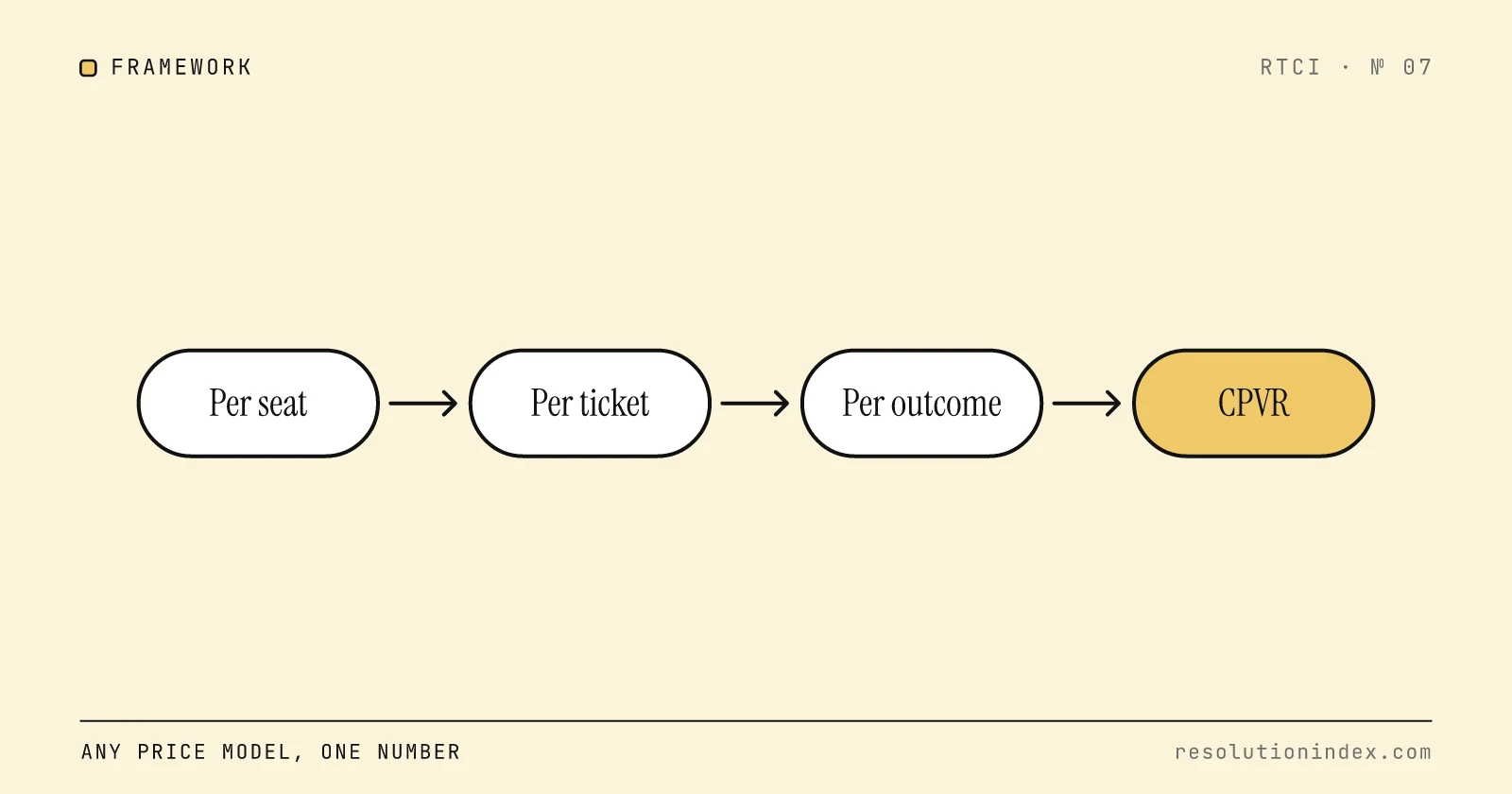
Per-seat, per-ticket, and per-resolution pricing models all produce different numbers for the same underlying cost. RTCI's three-layer cost model normalizes any vendor's pricing into a single comparable metric: cost per verified resolution.
Outcome-Based vs Seat-Based Pricing for AI Support: Which Model Should You Buy In 2026?
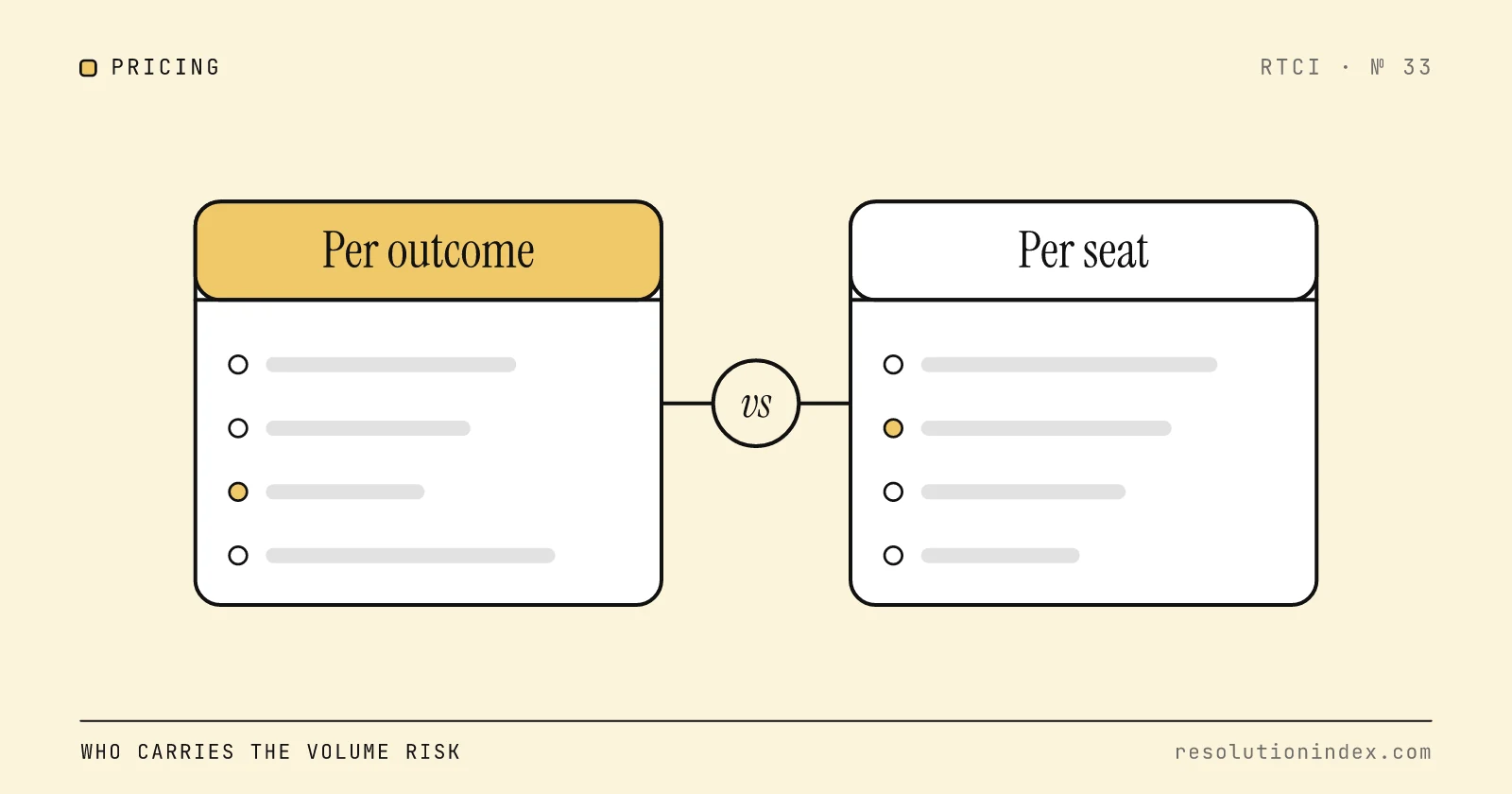
A buyer-side guide to choosing between outcome-based and seat-based AI support pricing in 2026, with current rates for Intercom Fin, Salesforce Agentforce, HubSpot Breeze, Zendesk AI and Freshdesk Freddy, a worked cost per verified resolution example, and a contract checklist.
Best AI Support Platforms for Enterprise (2026)
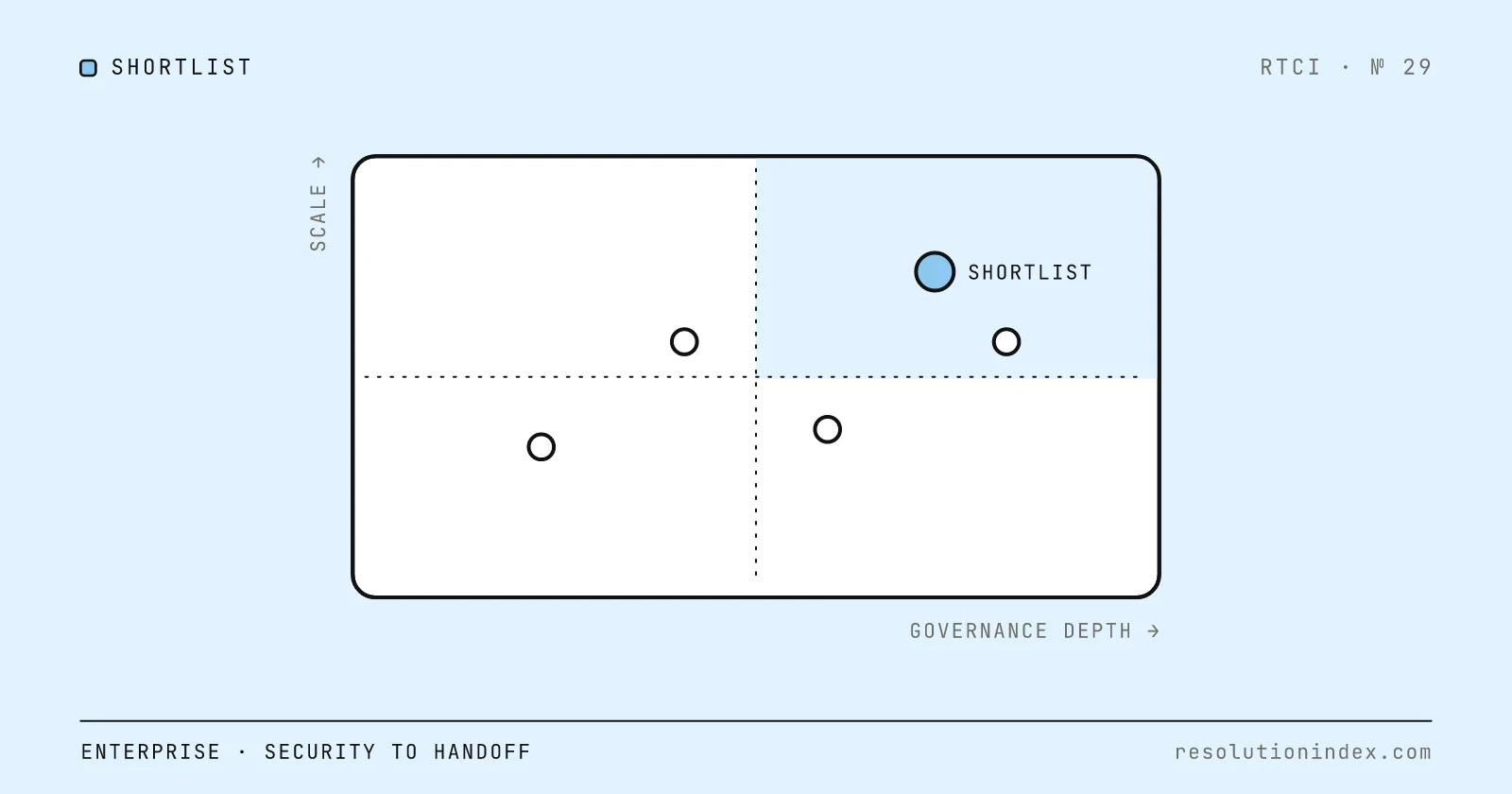
Enterprise shortlist: Salesforce Agentforce, Zendesk AI, Intercom Fin, Decagon, Sierra, Cognigy, and Kore.ai compared on security, deployment options, RTCI score, cost per resolution, and contract terms. Includes a copyable RFP scorecard.
Best AI Support Platforms for Mid-Market Companies (2026)
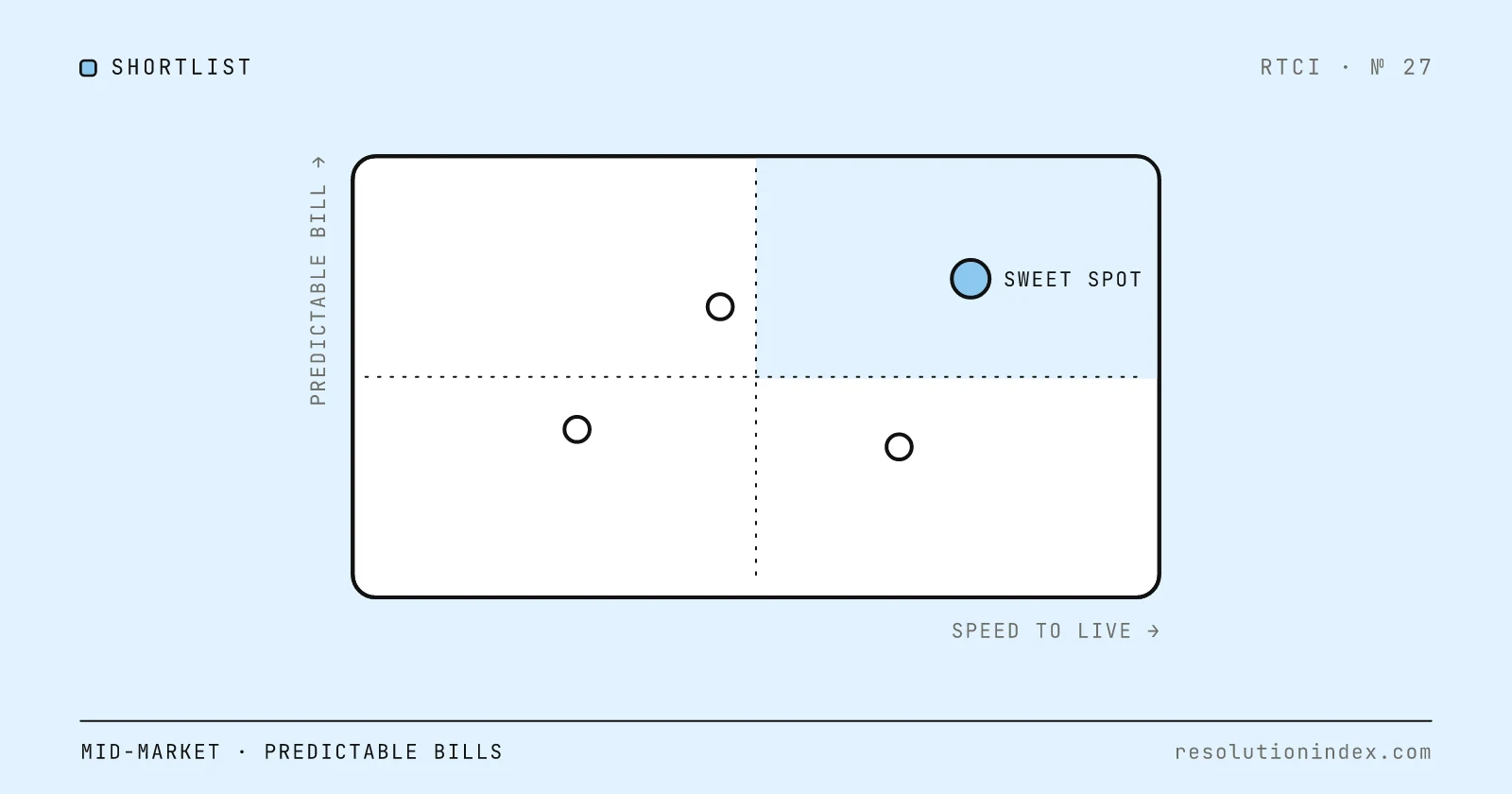
Mid-market shortlist: Intercom Fin, Freshdesk Freddy, Zendesk AI, DevRev, and YourGPT compared on bill predictability, 30–90 day implementation, and cost per verified resolution, with each vendor’s RTCI score and published price.
72-Hour Verified Resolution SLA: Copy-Paste Contract Clauses
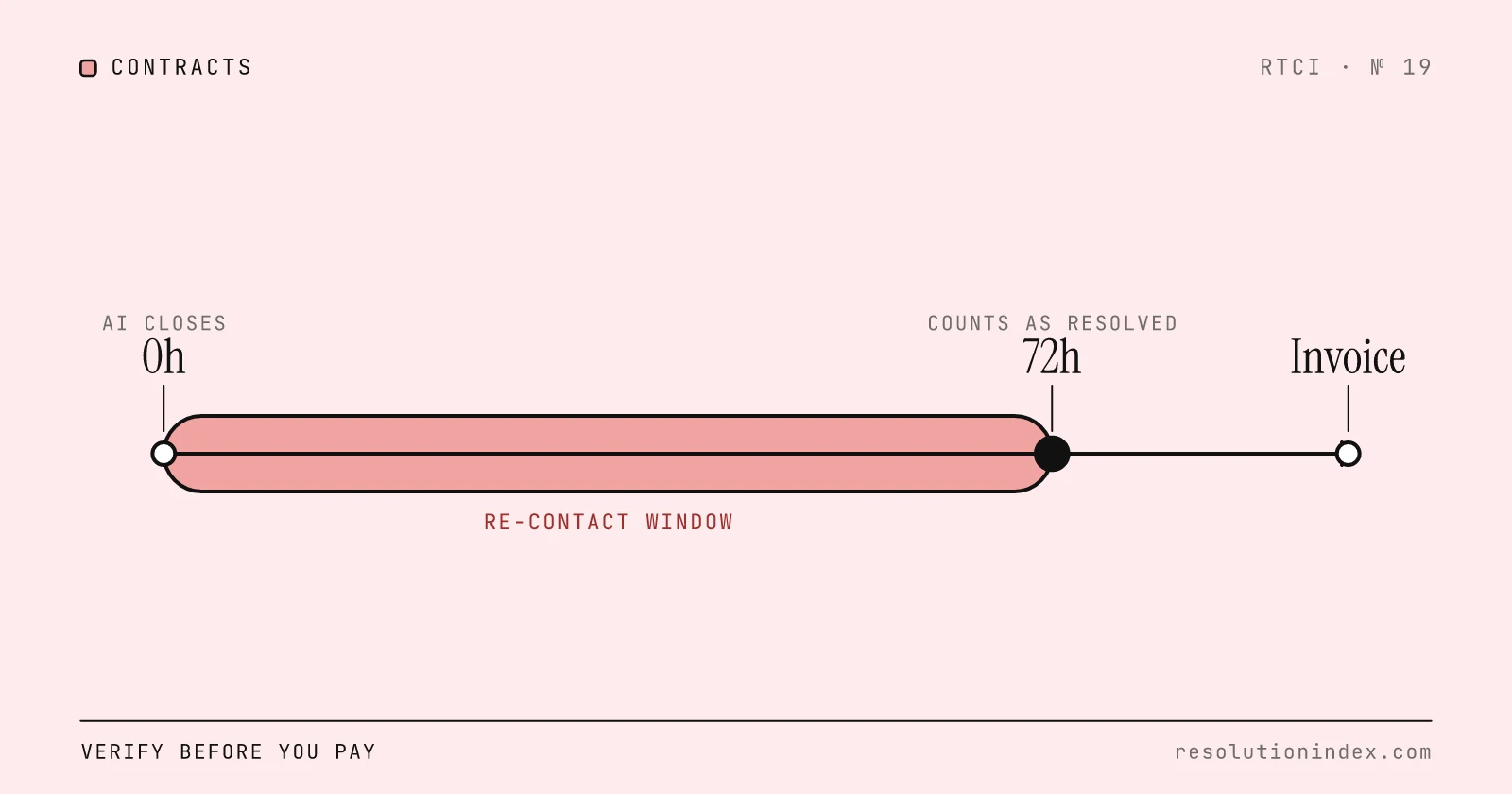
A buyer-side clause library for defining, measuring, auditing, crediting, and disputing 72-hour verified resolutions in AI support contracts.