Published Aug 8, 2026 · Updated Nov 19, 2026 · 5 min read
How to Choose an AI Customer Support Platform in 2026
A decision tree to shortlist AI support platforms: lock ticket mix, actions, integrations, and verified resolution before demos.
 Written by Andrew Hall, Editor
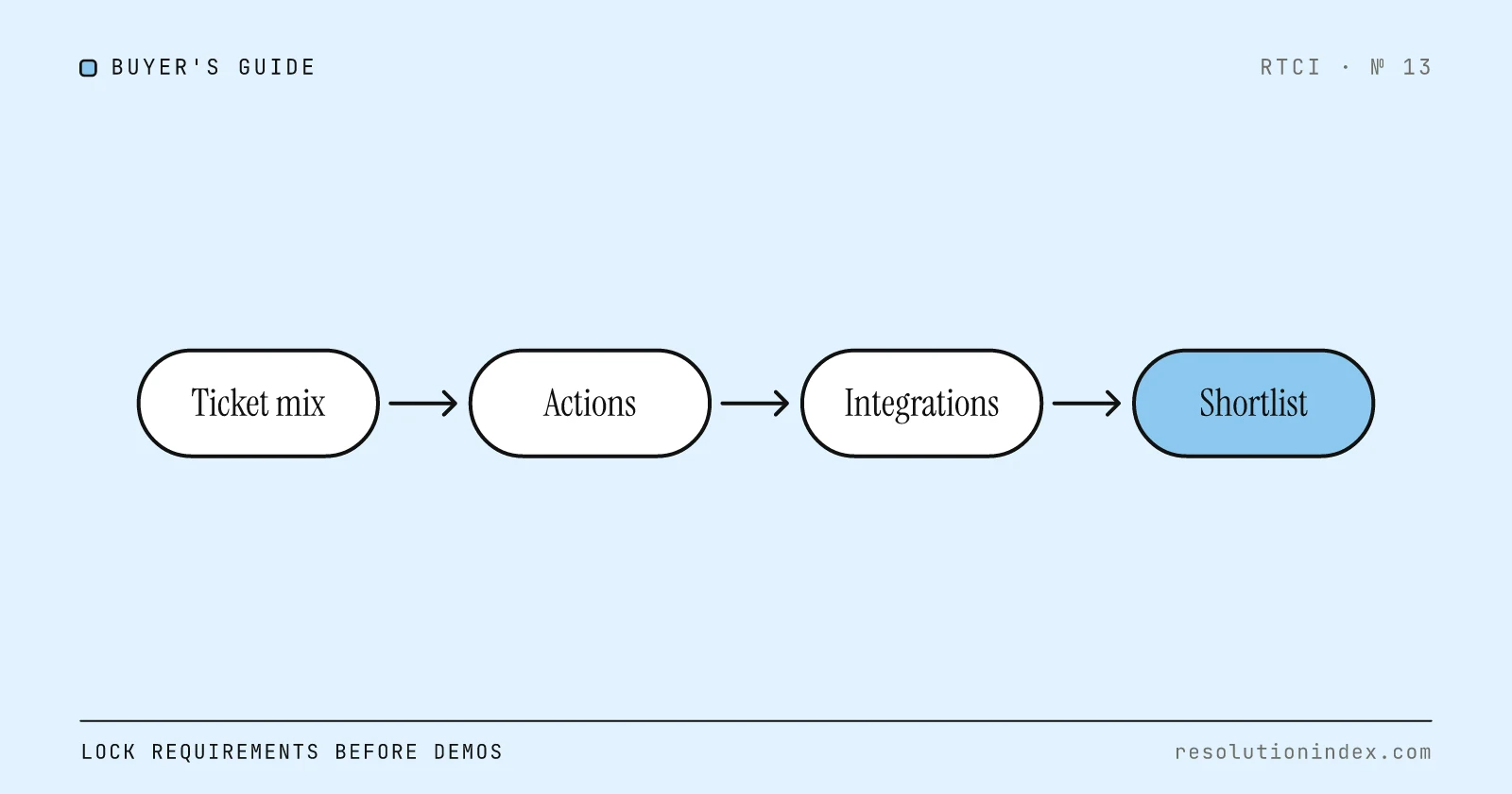
How do you choose an AI customer support platform?
Lock four inputs before any demo: your ticket mix, the system actions the AI must take, your integration constraints, and a written definition of verified resolution. Use knockout filters to remove vendors that cannot meet them, shortlist two or three, and compare finalists on cost per verified resolution from a pilot on your own tickets. Ignore seat prices and claimed resolution rates until those inputs are fixed.
What does the decision tree look like?
- What share of volume is repetitive and policy-bound? If it is small (a rule of thumb: under about 30%), start with agent-assist rather than autonomous AI.
- Which write actions are mandatory in-thread? If refunds or account changes are required, demand granular permissions and confirmation steps.
- What is the system of record? Shopify, Salesforce, a custom order system. If the vendor is weak there, knock it out.
- Which channels must work today? Email-only versus chat, social and voice changes the shortlist.
- What counts as verified resolution for you? For example: no human handoff and no re-contact within 72 hours.
- Budget shape: can you accept variable per-outcome costs, or do you need a capped plan?
- Compliance: HIPAA, financial or retention constraints?
- Shortlist size: two or three vendors for a fair pilot.
If you cannot answer steps 1 to 5 in writing, you are not ready for demos.
Which inputs should you lock before sales calls?
Put these on one page and make every vendor answer against it:
- Volume by channel and intent (the top 15 intents, covering at least 70% of volume)
- Current CSAT, handle time, backlog and outsourcing mix
- An honest rating of knowledge-base freshness
- Integration list, split into must-have and nice-to-have
- Definition of resolution and the re-contact window
- Fully loaded human cost per ticket
- Seasonal peaks
Which knockout filters should you apply?
Disqualify a vendor if:
- It has no written definition of a billable resolution, outcome or ticket
- It cannot export transcripts for audit
- You cannot measure re-contact
- Write actions cannot be permissioned
- Your must-have integration is on the roadmap
- It ignores your security questionnaire
- Pricing is only verbal
How do you build the shortlist?
From the vendors left, pick two or three by fit to your ticket mix, transparent unit economics, admin work your team can staff, and an exit path (exportable data and macros). Use head-to-head comparisons, such as Fin vs Gorgias for ecommerce, only after the decision tree says that pair is in scope.
How should you weight the scorecard?
A suggested starting template for B2B support. These weights are not RTCI's index method (the RTCI score is a log of realistic resolution rate per dollar); they are a way to make your own priorities explicit before demos.
| Criterion | Weight |
|---|---|
| Verified resolution on your pilot sample | 25 |
| Cost per verified resolution | 20 |
| Clarity of escalation cost | 15 |
| Integration completeness | 15 |
| Admin maintainability | 10 |
| Honest reporting | 10 |
| Security and compliance fit | 5 |
Change the weights for ecommerce, enterprise or mid-market, but write them down before the first demo.
Worked example: why resolution rate beats unit price
Assume an ecommerce team with 5,000 tickets a month, deciding between Intercom Fin ($0.99 per outcome) and Gorgias AI ($0.90 per automated interaction on annual billing). Use the midpoint of each vendor's range in RTCI's index: Fin 56–66%, so 61%; Gorgias AI 27–37%, so 32%. Assume $6 of human cost for every ticket the AI does not resolve. Helpdesk costs are left out; Gorgias's Advanced plan at $750 a month covers 5,000 tickets and is also the helpdesk.
| Intercom Fin | Gorgias AI | |
|---|---|---|
| AI resolutions | 5,000 × 61% = 3,050 | 5,000 × 32% = 1,600 |
| AI bill | 3,050 × $0.99 = $3,019.50 | 1,600 × $0.90 = $1,440 |
| Tickets left for humans | 1,950 | 3,400 |
| Human cost at $6 | $11,700 | $20,400 |
| Monthly total | $14,719.50 | $21,840 |
Gorgias's AI bill is $1,579.50 lower, but it leaves 1,450 more tickets for humans. It only comes out ahead if a human ticket costs less than $1,579.50 ÷ 1,450 = $1.09. Your own pilot rates replace the index midpoints; the arithmetic stays the same. Gorgias's case rests on its Shopify depth, which this table does not price.
Which contract questions are the minimum?
- The exact definition of a billable event
- Escalation double-billing rules
- Minimum commitments and overage math
- Data retention and training use of your tickets
- SLA credits that matter operationally
- Price protection when the vendor changes models or providers
- Termination assistance and export formats
If legal cannot get these in writing, pause procurement. The hidden fees in AI support contracts guide covers each clause.
When should a pilot be a go or a no-go?
A fair pilot uses unfiltered tickets, your resolution definition, enough time to see variance, and a manual audit of tickets marked resolved. The 90-day AI support pilot playbook and the fair pilot scorecard set out the design.
Go if verified resolution and cost per verified resolution beat your baseline by enough to fund the licence, there are no critical safety incidents, and your team can maintain the policies. No-go if results only hold on hand-picked intents, re-contact climbs, or the vendor blocks measurement.
Model escalation costs with the AI Escalation Cost Calculator, and discount vendor claims using Why Vendor-Claimed Resolution Rates Don't Match Reality.
Who owns which part of the selection?
- Support lead: ticket mix and pilot design
- Ops or admin: what the integrations actually do
- Finance: the cost per verified resolution model
- Security: the questionnaire
- Executive sponsor: settling knockout disputes
A 30-day timeline: days 1–3 inputs; days 4–5 knockouts; days 6–10 written questions to two or three vendors; days 11–25 pilot; days 26–30 decision memo with cost per verified resolution. Extend the pilot if 15 days of tickets is too few to cover your main intents.
What usually goes wrong?
- Starting with features instead of ticket mix
- Letting vendors pick the pilot sample
- No finance owner for unit economics
- Buying an enterprise suite for a single-intent problem
- Ignoring admin headcount
- Treating deflection as resolution
- Signing multi-year before the pilot
- Leaving seasonal promotions and partial-refund rules out of the AI's policies
Buyer checklist
- Scorecard weights written before demos
- Finance signed off the unit-economics model
- Security questionnaire returned
- Pilot sample unfiltered
- Re-contact measured independently
- Write-action permission matrix agreed
- Exit and export plan written
FAQ
How many vendors should I pilot? Two is ideal, three at most. Should I start with the market leader? Only if it survives the knockouts. What if my knowledge base is weak? Fix it in parallel or expect a low verified resolution rate; software does not replace missing policies. Is agent-assist enough? Often, when only a small share of your volume is repetitive and policy-bound.
Change log
- Replaced an unsourced apparel-brand anecdote and "field notes" with a worked Fin vs Gorgias example on index prices, relabeled the scorecard as a suggested template rather than RTCI weights, and linked the 90-day pilot playbook.
- Published.
Read next
Keep reading
Picked for this article: the pieces it cites and the ones that answer the next question buyers usually ask.
Most related
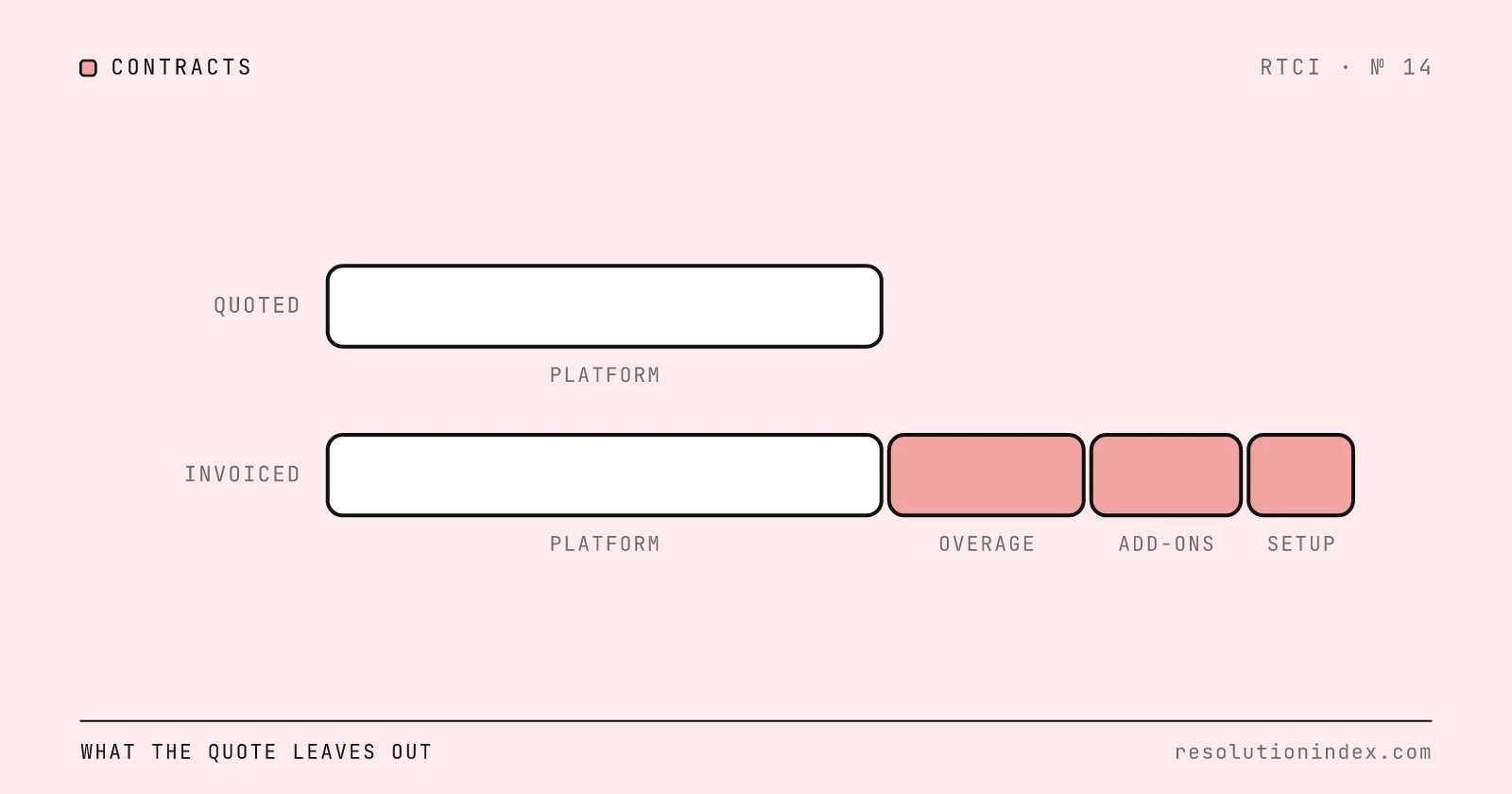
Hidden Fees in AI Support Contracts: What Buyers Miss
Where AI support invoices outgrow the quote: second meters, overage rates, one-time allowances, add-ons, outbound channels and exit costs, with clause language and a worked 12-month reconciliation.
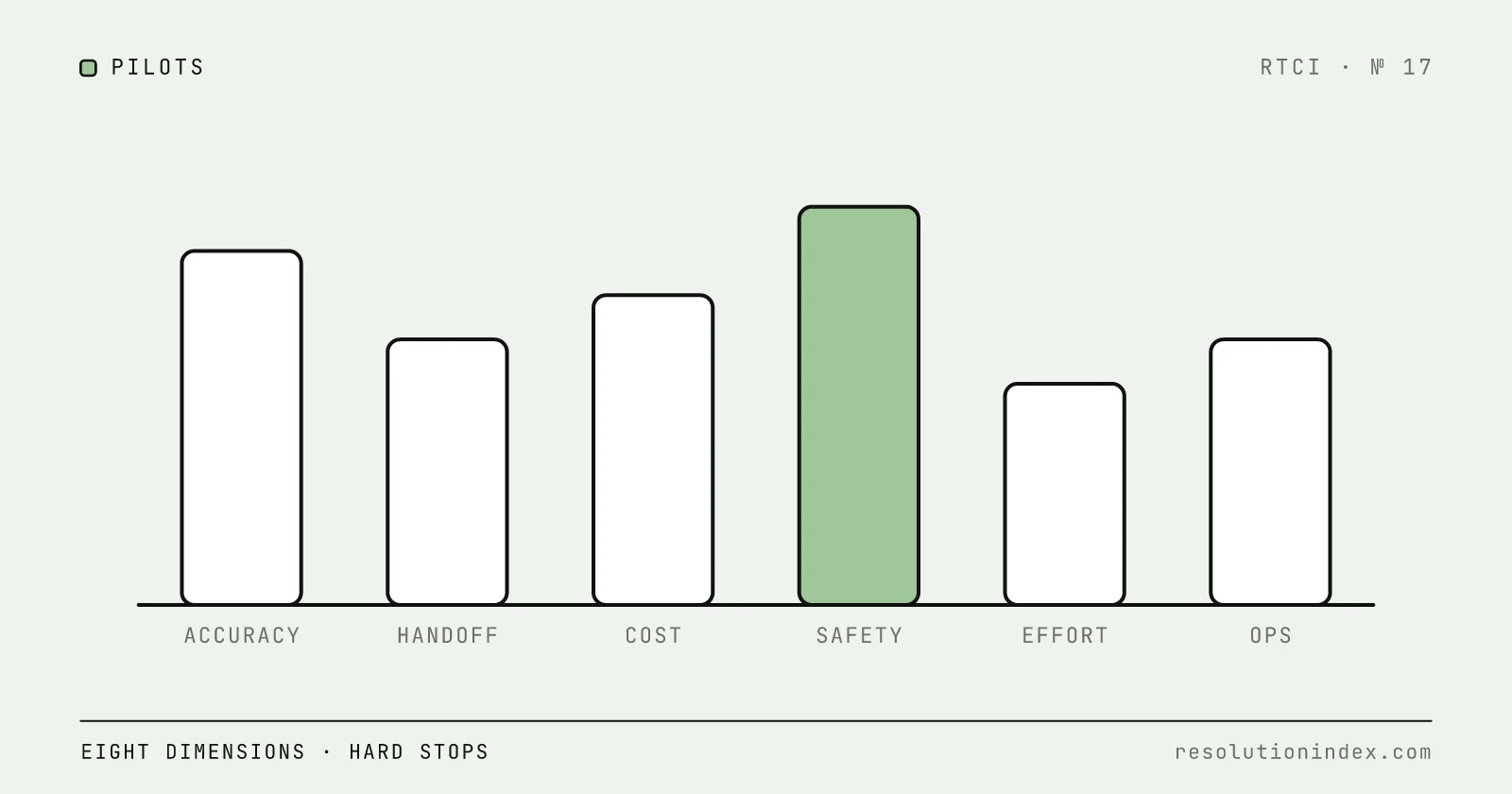
How to Design a Fair AI Support Pilot Scorecard
A weighted scorecard with 8 dimensions, hard-stop gates, and copy-paste Week 1–4 templates for evaluating an AI support pilot honestly.
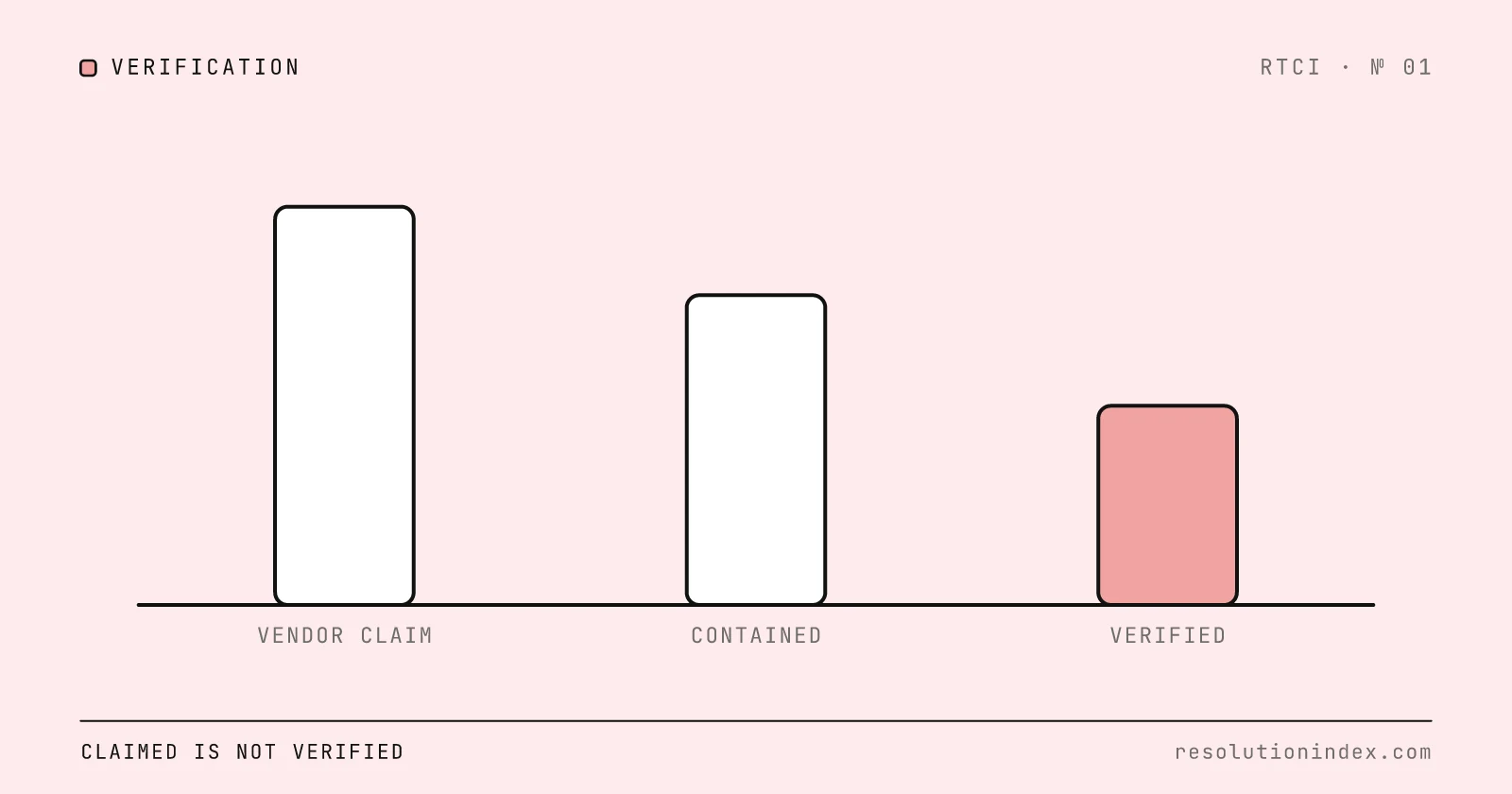
AI Resolution Rates: Why Vendor Claims Are Often Inflated
See how AI support vendors blur resolution, containment and deflection, how RTCI discounts each claim, and the five questions to ask before you compare two rates.
How to Pilot an AI Support Agent: A 90-Day Playbook
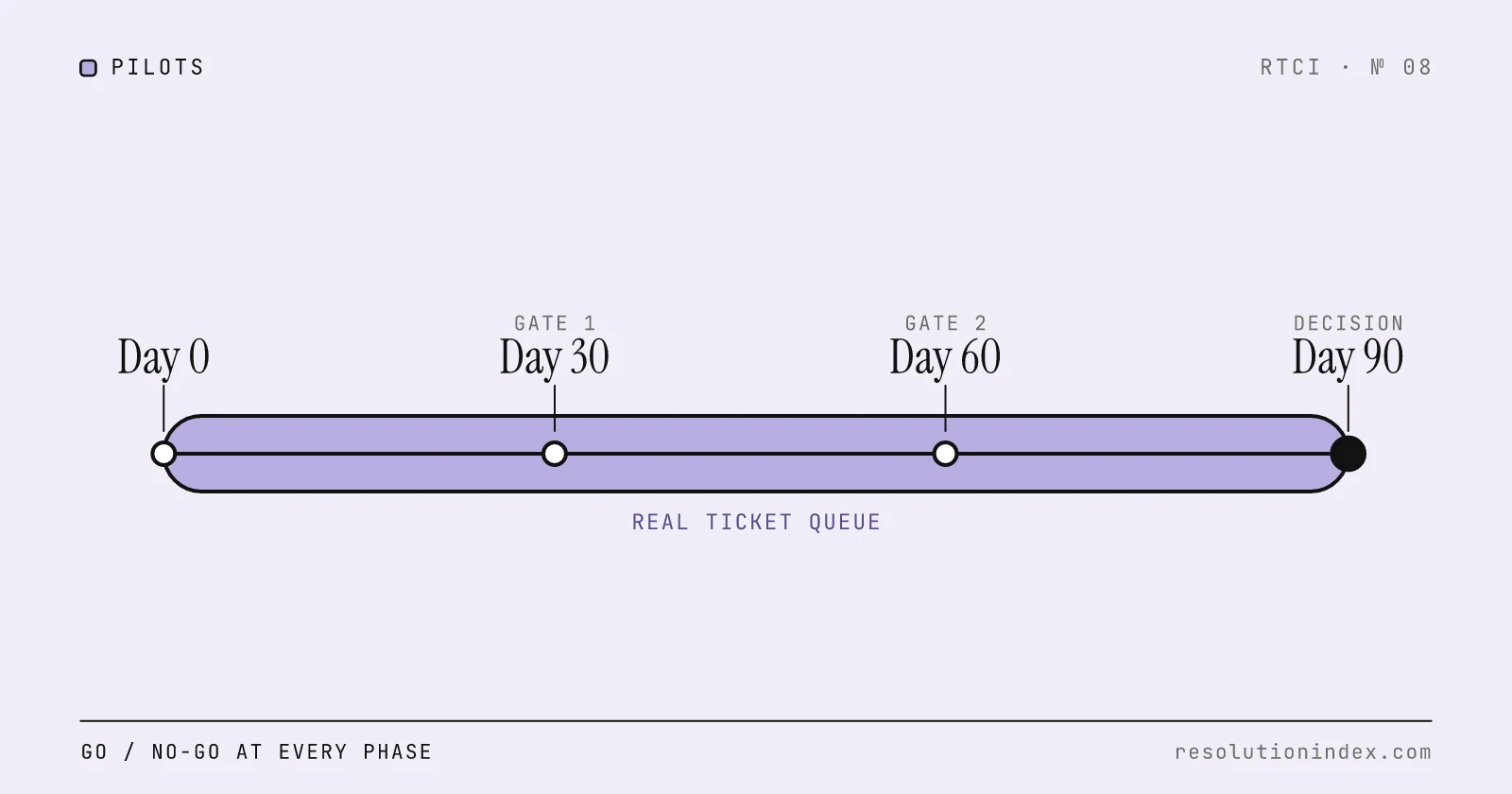
A vendor-agnostic 90-day plan for testing an AI support agent against your real ticket queue, with go/no-go criteria at each phase and clear rules for when to stop.
Best AI Support Platforms for Enterprise (2026)
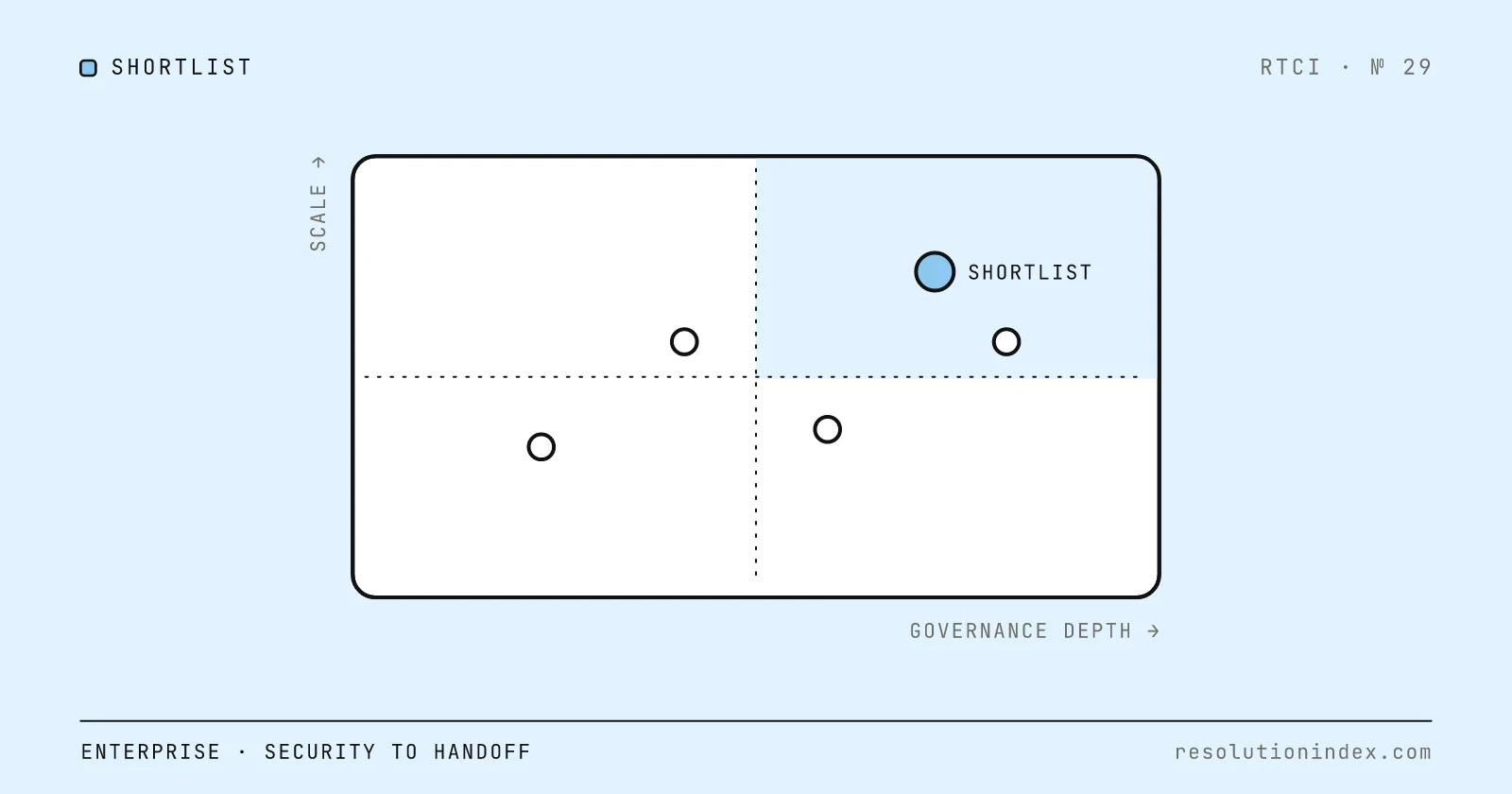
Enterprise shortlist: Salesforce Agentforce, Zendesk AI, Intercom Fin, Decagon, Sierra, Cognigy, and Kore.ai compared on security, deployment options, RTCI score, cost per resolution, and contract terms. Includes a copyable RFP scorecard.